Key Takeaways
-
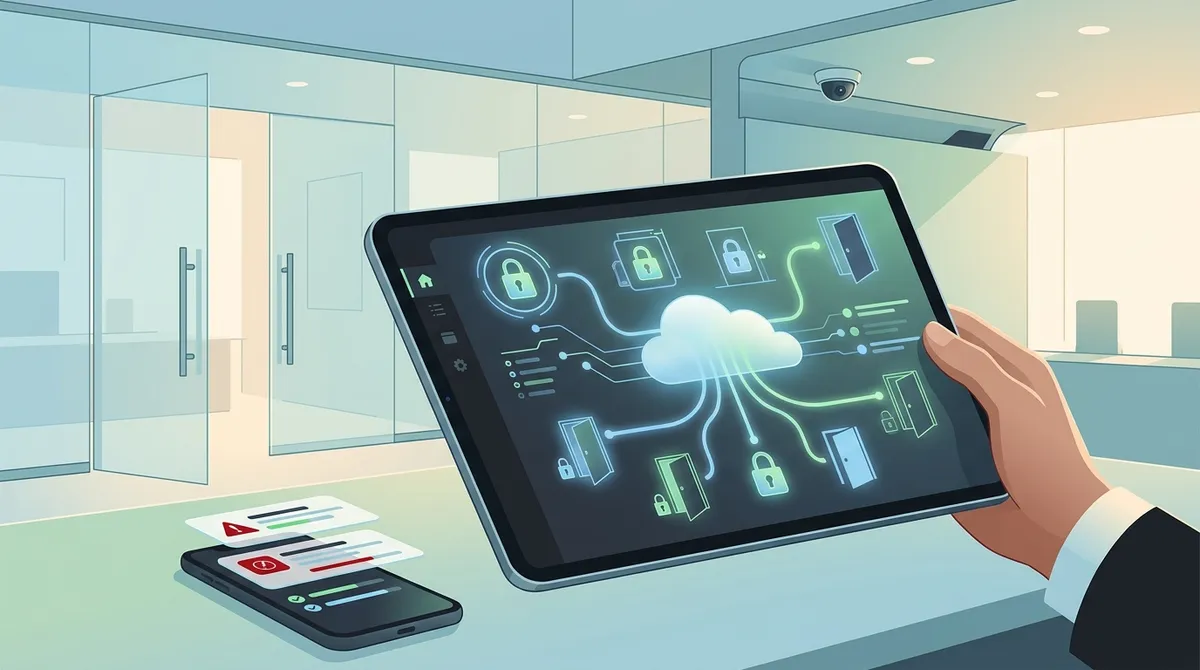
Cloud access control enables remote management from anywhere via browser or mobile app, allowing you to lock doors, revoke badges, and check entry logs instantly without on-site servers or dedicated IT teams.
-
Mobile credentials replace physical keys entirely, eliminating replacement costs and simplifying employee onboarding while removing concerns about lost or stolen keys.
-
Real-time alerts notify security teams immediately of unauthorized access attempts, doors held open too long, or after-hours access, enabling rapid incident response.
-
Cloud systems scale effortlessly for multi-location businesses—add new doors, users, and locations through one centralized dashboard without major infrastructure investments.
-
Automatic software updates keep your system continuously protected against latest threats without scheduling downtime or requiring IT intervention.
-
Integration with video surveillance, intercoms, and alarm systems creates unified physical security workflows where entry events automatically trigger relevant camera recording and security notifications.
If you’re still using old-fashioned keys or basic keypads to secure your building, you’re not alone. But here’s the thing — cloud access control is changing the game for businesses of all sizes. It’s smarter, easier to manage, and far more flexible than traditional systems. Whether you run a single office or manage locations across the country, this technology gives you real control over who enters your building and when.
The best part? You don’t need a room full of servers or a dedicated IT team to make it work. Cloud access control systems are managed entirely online, through a browser or mobile app. That means you can lock a door, revoke a badge, or check entry logs from anywhere in the world. Pretty powerful stuff!
In this article, we’re breaking down 10 key benefits of cloud access control for businesses. We’ll also answer the most common questions people have and help you figure out if it’s the right move for your organization. Let’s dive in!
What Is Cloud Access Control?
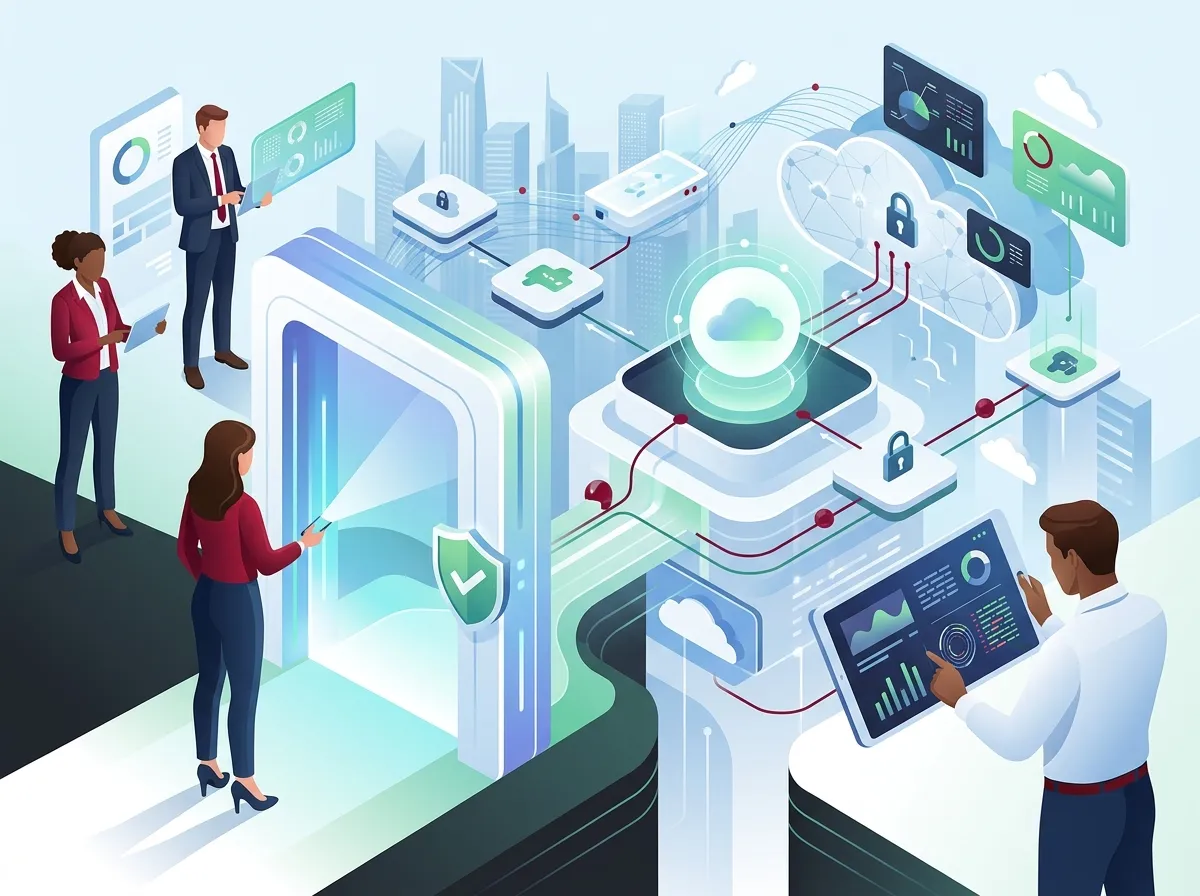
Cloud access control is a modern door security system that replaces old on-site servers with a cloud-managed platform. Instead of storing access data locally, everything is hosted in the cloud. Administrators manage doors, users, and permissions through a secure online dashboard or app.
This is different from a basic web-based system. Web-based systems may still rely on an on-site server, while true cloud-based systems are fully hosted and managed in the cloud. That’s an important distinction when you’re shopping for solutions. You can also learn more at 7 Reasons Tampa Businesses Love Cloud Access Control in 2026 to see how local businesses are already benefiting.
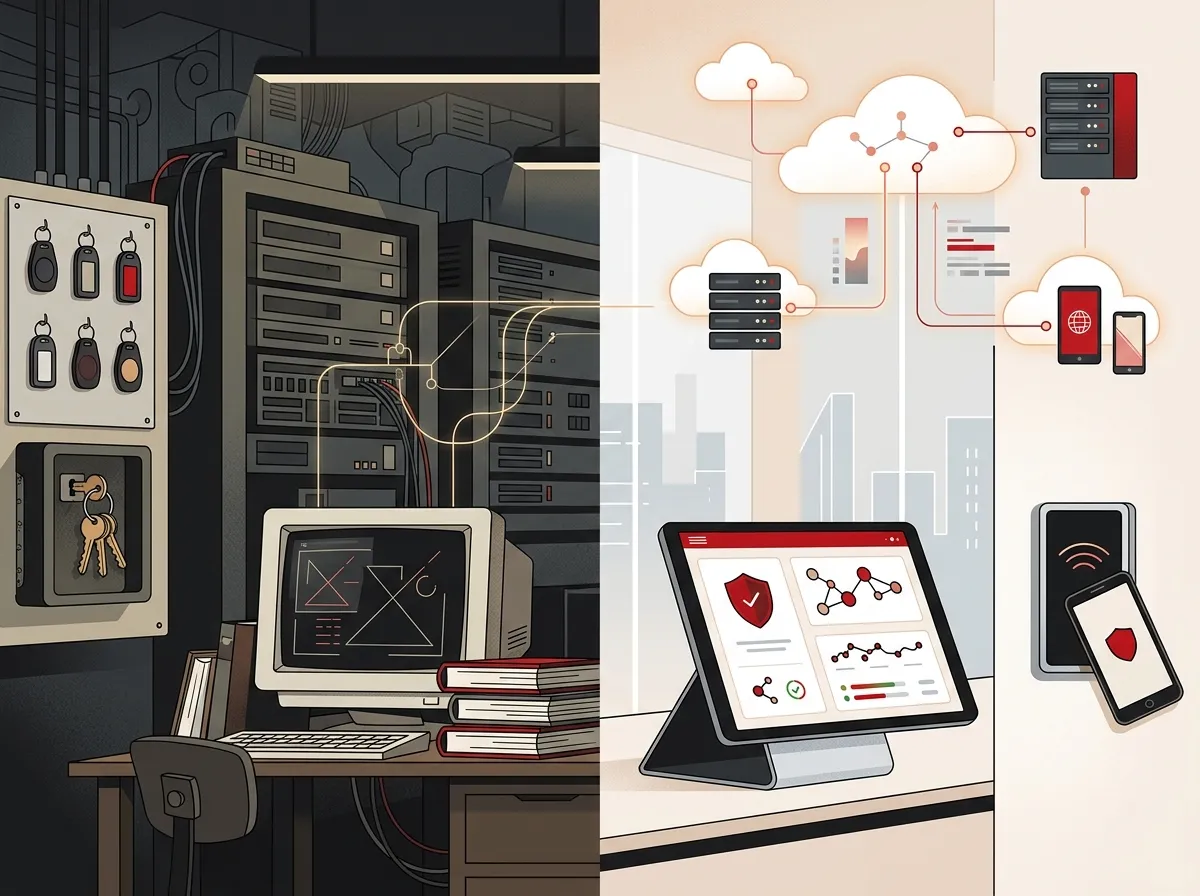
How Cloud Access Control Compares to Traditional Systems
| Feature | Traditional Access Control | Cloud Access Control |
|---|---|---|
| Server Location | On-site hardware required | Hosted in the cloud |
| Remote Management | Limited or requires VPN | Full remote access via app or browser |
| Software Updates | Manual, IT-dependent | Automatic and seamless |
| Scalability | Complex and costly | Easy to add doors and locations |
| Upfront Cost | High (servers + hardware) | Lower (no servers needed) |
| Multi-Site Management | Difficult | Centralized from one dashboard |
10 Benefits of Cloud Access Control for Your Business
1. Manage Access From Anywhere
One of the biggest wins with cloud access control is remote management. You can grant or revoke access, check entry logs, or lock a door from your phone — no matter where you are. This is a game-changer for business owners who travel or manage remote teams.
According to Acre Security’s 2026 overview, modern distributed organizations need real-time visibility and remote administration across multiple sites. Cloud access control delivers exactly that.
2. No More On-Site Servers
Traditional access control systems require bulky on-site servers and ongoing IT maintenance. Cloud-based systems eliminate that entirely. Everything runs in the cloud, so there’s no server to babysit, update, or replace. This also frees up physical space and reduces your internal IT workload significantly.
3. Real-Time Alerts and Notifications
Cloud access control sends instant alerts when something unusual happens. If an unauthorized person tries to enter, if a door is held open too long, or if access is attempted outside business hours — you’ll know right away. LenelS2 highlights real-time alerts as one of the core operational capabilities for modern security teams.
4. Easy Scalability for Growing Businesses
Adding a new office location? No problem. Cloud access control makes it easy to scale up without major infrastructure investments. You can add new doors, users, and locations through the same platform. This is especially useful for multi-location businesses managing scalable access control systems across several sites.
5. Mobile Credentials Instead of Physical Keys
Forget metal keys and plastic badges. Cloud access control supports mobile credentials, meaning employees can use their smartphones to unlock doors. This cuts down on key replacement costs and makes onboarding new staff much simpler. It also means you’ll never have to worry about a lost key again!
6. Role-Based Access Levels
Not everyone needs access to every room. Cloud access control lets you set role-based permissions so employees only enter the areas relevant to their job. IT staff can access server rooms, HR can secure personnel files, and executives can access restricted floors — all managed from one central dashboard.
7. Automatic Software Updates
One of the hidden joys of cloud systems is that updates happen automatically. No scheduling downtime. No waiting for an IT technician. Your cloud access control system stays current with the latest security patches and feature improvements on its own. This keeps your system protected without any extra effort on your part.
8. Seamless Integration with Other Security Systems
Cloud access control doesn’t work in isolation. It integrates beautifully with video surveillance, visitor management, intercoms, and alarm systems. This creates a unified physical security workflow where everything talks to each other. For example, when someone badges into a door, the nearest camera can automatically record the event.
You can explore how security cameras work together with your business security to get a fuller picture of integrated protection. This kind of layered security is what today’s businesses need.
9. Lower Upfront and Maintenance Costs
Cloud access control typically costs less upfront compared to traditional systems. You’re not buying expensive servers or paying for complex on-site installations. Maintenance costs are also lower because software updates and system monitoring are handled by the provider. This makes it a smart choice for budget-conscious businesses.
10. Centralized Management Across Multiple Locations
Managing access for five locations used to mean five separate systems. With cloud access control, everything is managed from a single platform. You can see who’s entering which building, at which time, across all your locations at once. This is a massive time-saver for IT managers and operations teams.
Key Features to Look for in a Cloud Access Control System
| Feature | Why It Matters | Who Benefits Most |
|---|---|---|
| Mobile Credentials | Eliminates physical keys | All businesses |
| Real-Time Alerts | Instant security notifications | Security managers |
| Multi-Site Dashboard | Centralized control | Franchise operators, enterprises |
| Role-Based Access | Controls who goes where | Corporate offices, healthcare |
| Video Integration | Links entry events to footage | Retail, warehouses |
| Automatic Updates | Always up to date | Small businesses, IT teams |
| Visitor Management | Tracks guests and contractors | Professional services, offices |
Who Should Consider Cloud Access Control?
Cloud access control is a great fit for a wide range of businesses. Here’s a quick breakdown of who benefits most:
- Small business owners who want easy, affordable security without hiring an IT team
- Growing mid-sized companies that need to scale security as they add locations
- IT managers looking for centralized, cloud-managed security tools
- Office managers who need simple day-to-day access management
- Franchise operators managing multiple sites and needing consistent security policies
If your business falls into any of these categories, it’s worth exploring your options. You can also check out how to choose access control systems for Tampa businesses for a step-by-step guide to making the right choice.
Cloud Access Control and Your Broader Security Strategy
Cloud access control works best when it’s part of a bigger security picture. Think of it as one piece of a smart, connected system. When paired with cloud video security systems, your business gets both visual and entry-point protection working together. That’s a powerful combination.
It’s also worth thinking about your network infrastructure. A strong, reliable network is the backbone of any cloud-based system. If your internet goes down, so does your cloud access control. That’s why businesses often bundle access control with robust internet services. Check out reliable network solutions for multi-location businesses to make sure your foundation is solid.
You can even visit Ideal Solutions Provider on Instagram to see real-world examples of integrated business security setups in action.
Steps to Getting Started With Cloud Access Control
Ready to make the switch? Here’s a simple process to follow:
- Assess your current setup. Take stock of your existing doors, entry points, and security needs.
- Define your access requirements. Think about who needs access to what areas and when.
- Choose the right platform. Look for a cloud access control system that offers mobile credentials, real-time alerts, and multi-site support.
- Plan your installation. Work with a professional installer to set up hardware at each access point.
- Integrate with existing systems. Connect your access control with cameras, alarms, and visitor management tools.
- Train your team. Make sure staff know how to use mobile credentials and report issues.
Common Cloud Access Control Questions From Business Owners
Is Cloud Access Control Secure?
Yes — in fact, cloud access control is often more secure than traditional systems. Cloud providers invest heavily in encryption, data protection, and security updates. Since updates happen automatically, your system is always protected against the latest threats. For telecom and enterprise buyers, this aligns well with broader cloud security and SaaS governance requirements.
Want to dive deeper into this topic? The article on cloud security vs. traditional network security is a great resource. It breaks down the key differences in a way that’s easy to understand.
What Is Access Control as a Service (ACaaS)?
ACaaS stands for Access Control as a Service. It’s a subscription-based model where the cloud access control platform is hosted and managed by a third-party provider. You pay a monthly or annual fee instead of buying and maintaining your own infrastructure. It’s similar to how businesses use SaaS tools for other business functions.
How Ideal Solutions Provider Can Help
Choosing and installing a cloud access control system can feel overwhelming — but it doesn’t have to be. Ideal Solutions Provider is a Tampa-based telecom and IT partner with over 24 years of experience helping businesses just like yours. They work with 35+ vetted suppliers to find the right access control solution for your needs and budget.
What makes them unique is their single-point-of-contact model. Instead of juggling multiple vendors, you have one trusted partner handling everything from consultation and installation to ongoing support. Learn more about the benefits of using one telecom partner in Tampa and why it simplifies everything.
You can also browse their solutions on Facebook or watch helpful video guides on their YouTube channel to get a better feel for what they offer.
Quick Reference: Cloud Access Control Benefits at a Glance
| # | Benefit | Key Advantage |
|---|---|---|
| 1 | Remote Management | Manage access from anywhere |
| 2 | No On-Site Servers | Reduces hardware and IT overhead |
| 3 | Real-Time Alerts | Instant security notifications |
| 4 | Easy Scalability | Grow without major new investments |
| 5 | Mobile Credentials | Ditch physical keys for good |
| 6 | Role-Based Access | Control who goes where |
| 7 | Automatic Updates | Always secure and current |
| 8 | System Integration | Links with cameras, alarms, and more |
| 9 | Lower Costs | Reduced upfront and ongoing expenses |
| 10 | Centralized Multi-Site Control | One dashboard for all locations |
Conclusion
Cloud access control is no longer just for large enterprises. Businesses of all sizes are making the switch because it’s smarter, simpler, and more cost-effective than traditional systems. From mobile credentials to real-time alerts to seamless multi-site management, the benefits are hard to ignore.
Whether you’re a small business owner looking to ditch physical keys, or an IT manager needing centralized control across dozens of locations, cloud access control has something to offer you. And when it’s paired with cloud video security and a reliable network, your business becomes truly well-protected.
Don’t wait until a security incident forces your hand. Take the first step toward smarter, cloud-managed access today. Reach out to our team at Ideal Solutions Provider for a free consultation — we’ll help you find the right system for your business, budget, and goals. Or if you prefer, just give us a call and let’s talk through your options together!
FAQs
Q: What is cloud access control in business security?
A: Cloud access control is a door security system where access permissions, user credentials, and entry logs are managed through an online platform instead of an on-site server. It lets business owners and admins control building access remotely using a browser or mobile app — super convenient and surprisingly easy to use!
Q: What is the difference between cloud-based and web-based access control?
A: Great question! Web-based access control may still rely on a physical server located at your facility, while true cloud-based access control is fully hosted in the cloud with no on-site server required. Cloud-based systems are generally easier to maintain and more scalable for growing businesses.
Q: Is cloud access control secure enough for business use?
A: Absolutely! Cloud access control systems use strong encryption, automatic security updates, and multi-factor authentication to keep your building secure. In many cases, they’re actually more secure than older traditional systems because they’re always up to date with the latest protections.
Q: Can cloud access control work for businesses with multiple locations?
A: Yes — and this is one of its biggest strengths! Cloud access control lets you manage all your locations from a single centralized dashboard. You can set different access rules for each site, monitor entry logs in real time, and make changes instantly across all locations at once.
Q: What is Access Control as a Service (ACaaS)?
A: ACaaS is a subscription-based model where your cloud access control platform is hosted and managed by a third-party provider. Instead of buying and maintaining your own hardware and software, you pay a predictable monthly or annual fee — making it a budget-friendly option for businesses of all sizes.