
Key Takeaways
-
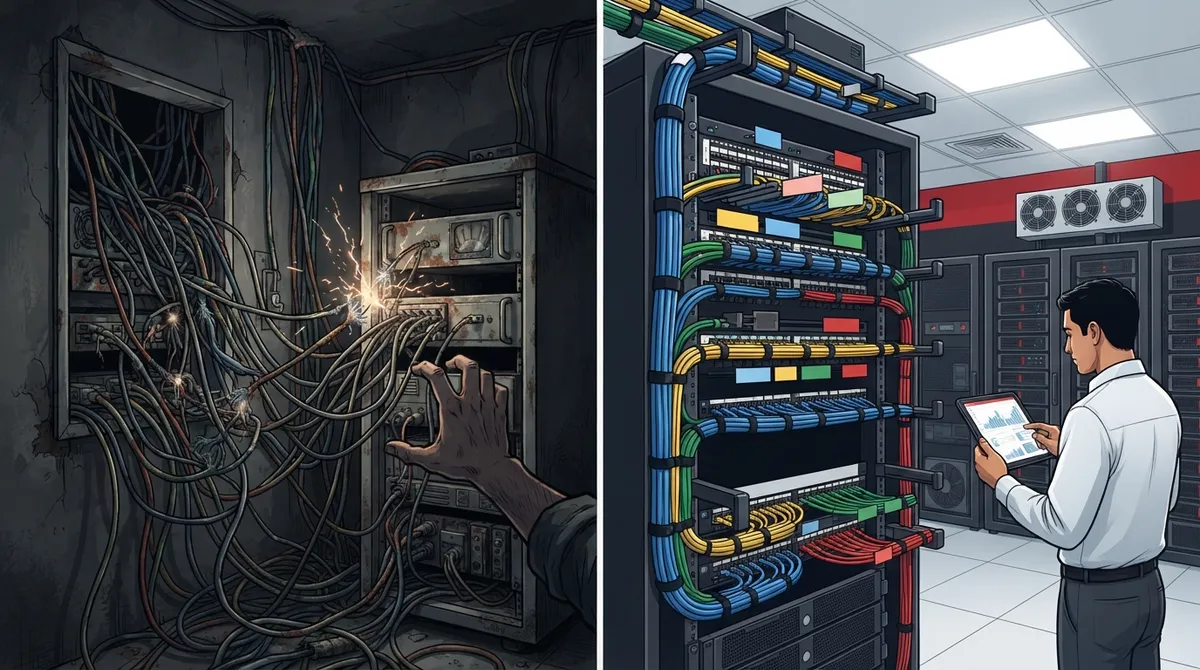
Professional structured cabling installation in Lakeland prevents costly downtime and network failures by following TIA/BICSI standards, while DIY approaches using residential-grade cables often result in slow networks, dropped calls, and expensive rework.
-
Structured cabling serves as the foundation for your entire tech stack—VoIP phones, security cameras, access control, and Wi-Fi—so weak cabling is often the hidden culprit behind unreliable office connectivity and performance issues.
-
Common DIY pitfalls include using residential-grade instead of commercial Cat5e/Cat6a cables, skipping proper labeling and testing, and running cables too close to electrical lines, which damages performance and complicates future troubleshooting.
-
A professional installation includes site assessment, custom network design, horizontal and vertical cabling, rack installation, testing and certification—building a scalable foundation that grows with your business instead of requiring constant rework.
-
Choosing one trusted telecom partner for cabling, internet, phones, and security eliminates vendor juggling and ensures consistent setup across multiple Lakeland locations, making IT management and troubleshooting significantly simpler.
-
Licensed Lakeland installers should be insured, compliant with industry standards, provide testing documentation, offer ongoing maintenance, and have experience with projects similar in size and complexity to yours.
Picture this: your Lakeland office just added five new employees, and suddenly your internet crawls, your phones drop calls, and your security cameras freeze up at the worst times. Sound familiar? A lot of growing businesses face this exact headache, and the fix almost always comes down to one thing: cabling. Whether you’re a small business owner juggling a dozen tasks or an IT manager trying to keep a growing network humming, the question of structured cabling installation in Lakeland eventually lands on your desk.
So here’s the real debate we’re tackling today: should you try to handle cabling yourself (or hand it to a general handyman), or should you bring in a licensed professional who specializes in commercial-grade structured cabling? We’re breaking down both paths so you can make the choice that’s right for your business, your budget, and your sanity. Grab a coffee, because we’re about to make this decision a whole lot easier.
What Is Structured Cabling, Really?
Structured cabling is the organized system of wires, jacks, racks, and connectors that ties together your data, voice, video, Wi-Fi, and security systems. Think of it as the nervous system of your office. Every device, from your VoIP phones to your security cameras, depends on this backbone to talk to each other and to the outside world.
Unlike residential wiring shortcuts, business-grade structured cabling follows strict design standards. It’s built to grow with your company instead of falling apart the moment you add a new employee or a new piece of equipment. In Lakeland, this matters more than ever as businesses lean harder on cloud tools, remote monitoring, and always-on connectivity.
Why Lakeland Businesses Can’t Ignore This
Lakeland sits in the middle of a booming Central Florida corridor, with businesses expanding across office parks, medical centers, and industrial campuses. That growth means more devices, more data, and more pressure on outdated wiring. A tangled mess of cables might work for a week, but it will eventually cost you in downtime, slow speeds, and frustrated employees.
- Supports uninterrupted data transmission for daily operations
- Powers VoIP phone systems without dropped calls
- Keeps Wi-Fi strong throughout the entire building
- Connects security cameras and access control systems reliably
- Scales easily as your business adds staff or locations

The DIY Route: What It Really Looks Like
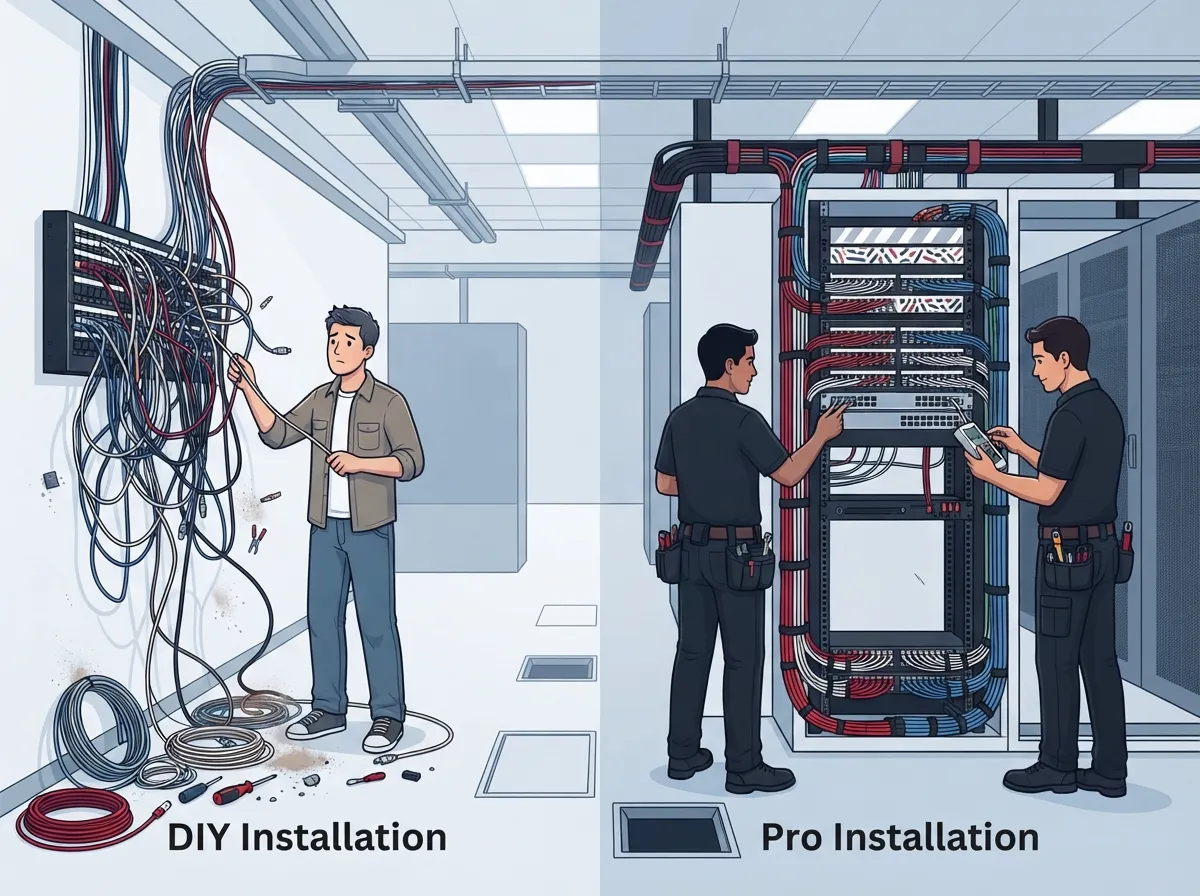
Let’s be honest, the appeal of doing it yourself is obvious. It feels cheaper upfront, and if you’ve got a handy team member, why not save some cash? But cabling is trickier than it looks, and mistakes here tend to snowball fast.
Common DIY Pitfalls
- Using residential-grade cable instead of commercial Cat5e, Cat6, or Cat6a wiring
- Skipping proper labeling, which turns troubleshooting into a nightmare later
- Running cables too close to electrical lines, causing interference
- Ignoring bend radius limits, which damages cable performance
- Failing to test and certify the finished installation
These mistakes don’t just cause minor annoyances. They can lead to slow networks, failed security systems, and costly rework down the road. If you’ve ever wondered why your office Wi-Fi randomly drops or your phone calls sound choppy, bad cabling is often the hidden culprit. We actually cover several of these issues in our article on 12 structured cabling mistakes that hurt your business.
The Professional Route: What You’re Really Paying For
Professional structured cabling installation in Lakeland means working with licensed, insured contractors who follow real industry standards. That includes guidelines from ISO/IEC, TIA, ANSI, and BICSI, the organizations that set the rules for reliable business networks.
What a Professional Installation Includes
A full-service cabling project typically covers far more than just running wires through walls. Here’s what you can expect from a quality provider:
- Site assessment and custom network design
- Horizontal cabling from the telecom room to individual workstations
- Vertical cabling connecting multiple floors in larger buildings
- Installation of racks, switches, patch panels, and UPS backups
- Testing and certification to confirm everything performs as promised
- Ongoing maintenance and support after installation
This isn’t just about wires. It’s about building a foundation that supports your cloud-based phone system, your internet connection, and your entire security setup for years to come.
Head-to-Head Comparison: DIY vs. Professional Cabling
| Factor | DIY or Handyman Approach | Professional Installation |
|---|---|---|
| Standards Compliance | Rarely meets TIA/BICSI standards | Fully compliant with industry standards |
| Cable Quality | Often residential-grade | Commercial Cat5e, Cat6, Cat6a, fiber |
| Scalability | Limited, hard to expand | Built for future growth |
| Testing & Certification | Usually skipped | Included as standard practice |
| Upfront Cost | Lower | Moderate to higher |
| Long-Term Cost | Higher due to rework and downtime | Lower due to reliability |
| Warranty & Support | None | Ongoing maintenance available |
Cable Types Used in Commercial Structured Cabling
Not all cables are created equal, and choosing the right type matters for performance and future-proofing. Lakeland installers typically work with several options depending on your needs.
| Cable Type | Best For | Typical Use |
|---|---|---|
| Cat5e | Basic data and voice | Small offices, budget setups |
| Cat6 | Faster speeds, better performance | Standard business networks |
| Cat6a | High-speed, long-distance runs | Larger offices, data-heavy operations |
| RG6/RG59 | Video and coaxial applications | Security camera systems |
| Fiber Optic | Maximum speed and bandwidth | Multi-building campuses, data centers |
For a deeper dive into cable choices, check out our comparison on key differences between CAT5e and CAT6 cabling for businesses.
Horizontal vs. Vertical Cabling: What’s the Difference?
These two terms come up a lot, and they’re worth understanding before you start any project.
- Horizontal cabling runs from the telecom room out to individual work outlets, like desks, phones, and wireless access points.
- Vertical cabling connects different floors or buildings within a larger facility, often using fiber for speed and distance.
Most Lakeland office buildings need horizontal cabling at minimum, while multi-floor facilities and campuses require both. Getting this mix right from the start saves you from expensive rewiring later.
How Structured Cabling Supports Your Whole Tech Stack
Here’s the thing many business owners don’t realize until it’s too late: structured cabling isn’t just about internet speed. It’s the foundation for nearly every piece of technology in your building.
- VoIP phone systems rely on stable, low-latency connections
- Cloud security cameras need consistent bandwidth to stream and store footage
- Access control systems require reliable connections to function properly
- Wi-Fi access points depend on properly placed cabling for full coverage
- High-speed internet performance is only as good as the wiring behind it
If any of these systems feel unreliable in your Lakeland office, weak cabling could be the root cause. We’ve written more about this connection in how structured cabling supports VoIP and cameras.
Steps to a Successful Cabling Installation
Whether you’re building a new office or upgrading an old one, a smooth project usually follows this sequence:
- Schedule a site walkthrough and network assessment
- Design a cabling layout based on current and future needs
- Select the right cable types and equipment for your building
- Install horizontal and vertical cabling according to code
- Test every connection for speed and reliability
- Certify the installation against industry standards
- Set up ongoing support and maintenance plans
Skipping any of these steps is how businesses end up with the DIY headaches we mentioned earlier. A trusted partner walks you through every stage, so nothing falls through the cracks.
Choosing the Right Structured Cabling Partner in Lakeland
Not every cabling company is created equal, and picking the wrong one can undo all the benefits of professional installation. Here’s what to look for.
Questions to Ask Before You Hire
- Are you licensed and insured to work in Lakeland and the surrounding counties?
- Do you follow TIA, BICSI, and ANSI standards for all installations?
- Can you provide testing and certification documentation?
- What ongoing support or maintenance plans do you offer?
- Have you worked on projects similar to mine in size and complexity?
Lakeland businesses often work with providers who also serve Plant City, Brandon, and the greater Tampa Bay region, since many contractors cover all 18 counties across Central Florida. That kind of regional experience means they’ve likely handled a project just like yours before.
Why Businesses Trust a Single Telecom Partner
Managing structured cabling, internet service, phone systems, and security cameras through separate vendors gets messy fast. That’s why so many Lakeland businesses are shifting toward working with one trusted partner for everything.
At Ideal Solutions Provider, we’ve spent over 24 years helping businesses across Tampa Bay and nationwide simplify their telecom setups. As a single point of contact working with 35+ vetted suppliers, we handle everything from consultation to installation to ongoing support, so you never have to juggle multiple vendors again. If you’re curious how this approach compares to going it alone, take a look at our piece on why one telecom partner beats managing several.
Franchise and Multi-Location Considerations
If you’re managing multiple Lakeland locations or planning to expand across Florida, structured cabling needs to be consistent across every site. Scalable cabling design means new locations can be added without reinventing your network each time.
- Standardized cabling specs across all locations for easier troubleshooting
- Centralized network management for IT teams overseeing several sites
- Consistent Wi-Fi and security camera performance company-wide
- Simplified vendor relationships when working with one telecom partner
This approach saves time, reduces confusion, and keeps your brand experience consistent whether a customer walks into your Lakeland store or one three counties away.
Final Verdict: DIY or Professional?
We get it, budgets matter, and it’s tempting to cut corners. But when it comes to structured cabling installation in Lakeland, the DIY route almost always costs more in the long run through downtime, poor performance, and expensive fixes. Professional installation gives you a network built to last, backed by real standards and real support.
Your business deserves a communication system that just works, without you having to think twice about it. Whether you need fresh cabling for a new office, an upgrade for a growing team, or a full network overhaul across multiple locations, getting it done right the first time saves you headaches later.
Ready to stop guessing and start building a network that actually supports your business? Contact us today for a free consultation, or call us to talk through your project with a friendly expert who genuinely wants to help. You can also follow along with tips and updates on our Facebook page, catch behind-the-scenes content on Instagram, or watch installation walkthroughs on our YouTube channel. We’d love to be part of your business’s next chapter.
FAQs
Q: What is structured cabling and why does it matter for my Lakeland business?
A: Structured cabling is the organized network of wires and connections that supports your data, phones, Wi-Fi, and security systems. Without it, your business risks slow networks, dropped calls, and frustrated employees, so getting it right really does matter!
Q: Which standards must structured cabling installers in Lakeland follow?
A: Reputable installers follow standards set by ISO/IEC, TIA, ANSI, and BICSI, which keep your network reliable and future-ready. Working with a licensed contractor who understands these rules gives you real peace of mind.
Q: Can I just do the cabling myself to save money?
A: You could, but it often leads to bigger headaches like slow speeds, failed certifications, and costly rework down the line. A little upfront investment in professional installation tends to save you far more over time!
Q: Does structured cabling support VoIP phones and security cameras?
A: Absolutely, structured cabling is the backbone that powers your VoIP calls, security cameras, and access control systems all at once. A strong cabling setup means everything runs smoothly together without random glitches.
Q: How long does a typical structured cabling installation take in Lakeland?
A: It really depends on the size of your office, but most small to mid-sized projects wrap up within a few days to a couple weeks. Larger campuses or multi-floor buildings naturally take a bit longer, but your provider should give you a clear timeline upfront.