Key Takeaways
-
Structured cabling follows TIA-568 standards and includes full documentation, while ad-hoc wiring causes slower networks, more downtime, and difficult troubleshooting that costs Tampa businesses significantly more to fix over time.
-
Cat6 cabling is the minimum standard for new Tampa commercial projects in 2026, supporting up to 10 Gbps and providing future-proof infrastructure at a lower cost than fiber optic alternatives.
-
Structured cabling is essential when upgrading to VoIP systems, adding cloud security cameras, or expanding to multiple locations, as these technologies require reliable, low-latency network infrastructure.
-
Office renovations and new construction are the most cost-effective times to install structured cabling; retrofitting unorganized cabling later costs 20-40% more than planning during initial buildout.
-
Certified BICSI contractors with Florida state licensing and proven experience with commercial projects provide documented as-built drawings and testing that prevent costly compliance issues and IT support delays.
-
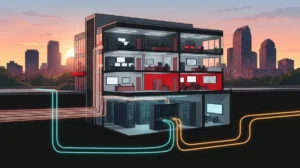
Structured cabling serves as the foundation for your entire telecom ecosystem including VoIP, internet, wireless access points, security cameras, and access control, making everything perform better together.
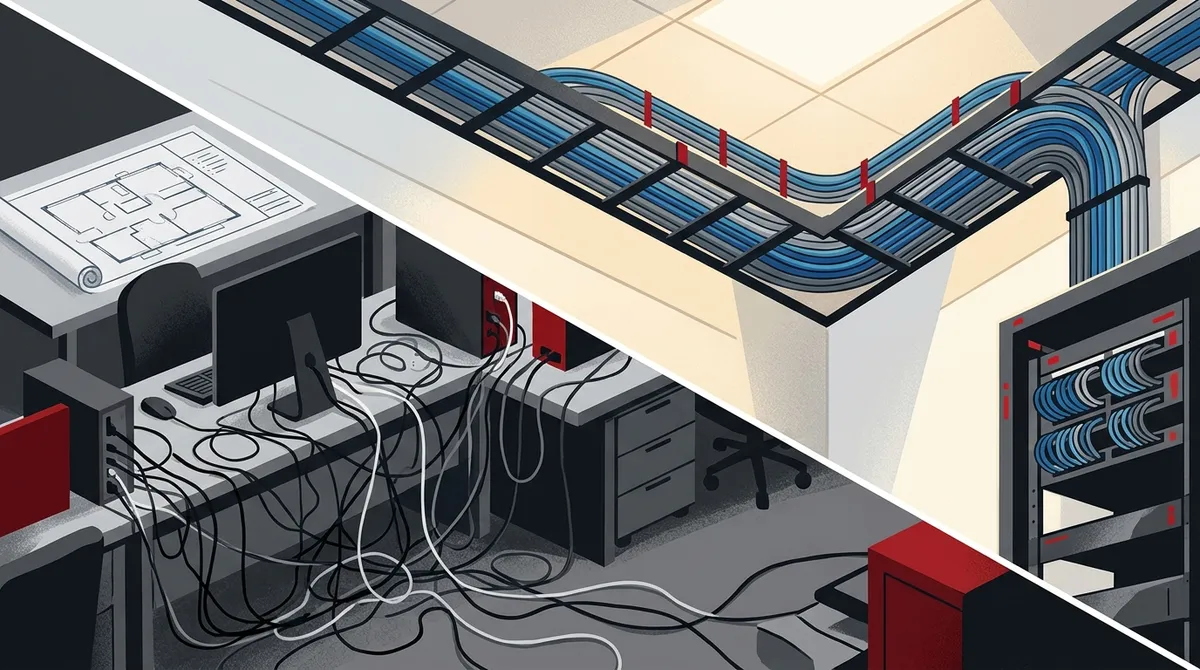
If you’ve ever walked into a server room and seen a tangled mess of cables going everywhere, you already know the problem. That chaos has a name: ad-hoc wiring. And if your Tampa business is running on it, you might be paying a hidden price every single day. We’re talking about slower networks, more downtime, harder troubleshooting, and a setup that fights you every time you need to grow.
On the other side, there’s structured cabling — a professionally designed, standards-based wiring system built to support your voice, data, fiber, and network needs for years to come. It’s the kind of backbone that serious businesses in Tampa rely on to keep everything running smoothly.
In this article, we’re breaking down exactly what separates structured cabling from ad-hoc wiring, why it matters for Tampa businesses in 2026, and how to decide which path makes sense for you. Whether you’re setting up a new office, renovating, or just tired of network headaches, this comparison is for you.
What Is Structured Cabling for Tampa Businesses?
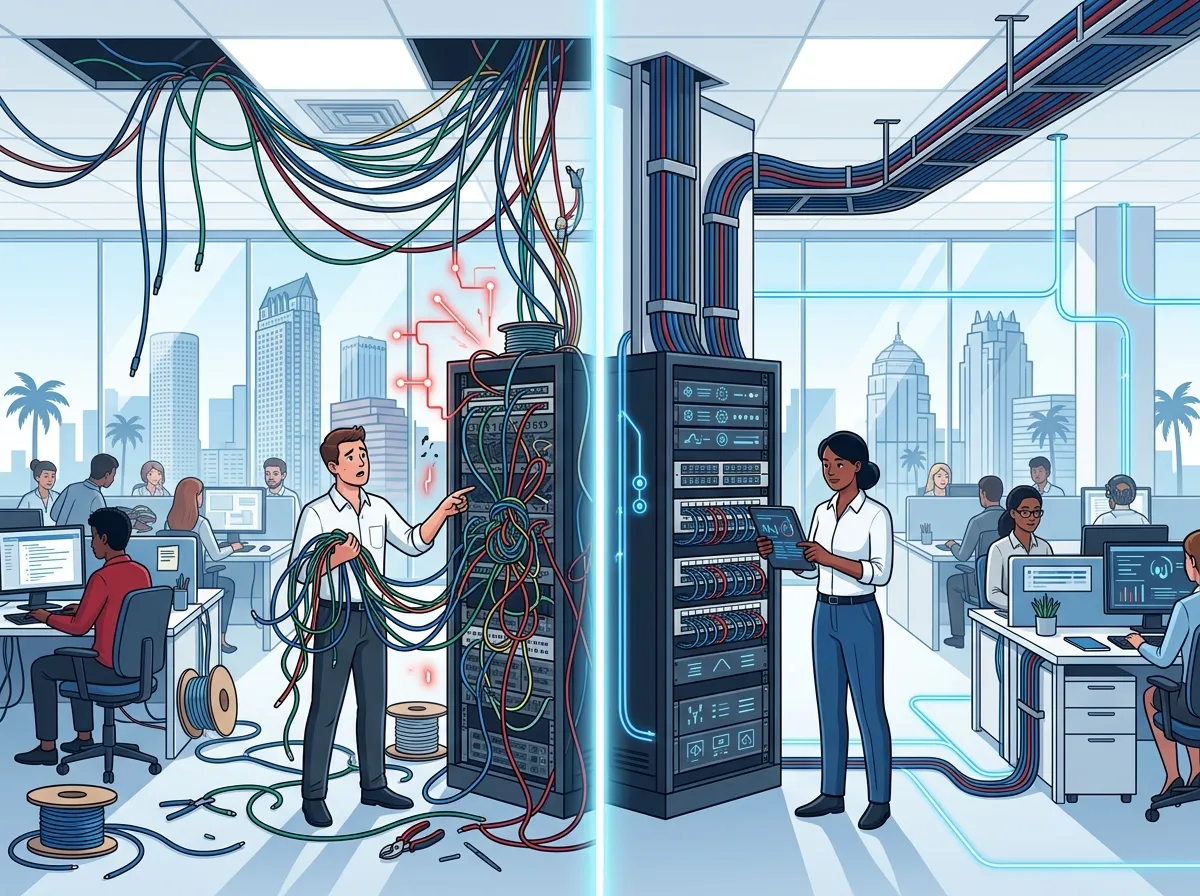
Structured cabling is a complete, organized cabling infrastructure designed around industry standards. Think of it like the electrical system in a well-built home — everything is planned, labeled, routed properly, and documented. For businesses, this means every cable, patch panel, switch, and connection point has a purpose and a place.
A professional structured cabling installation company in Tampa FL will design your system to support voice, data, fiber, wireless access points, VoIP phones, cloud security cameras, and access control — all from one unified infrastructure. It follows standards like TIA-568, and certified installers ensure everything is tested, documented, and ready for inspection.
Ad-hoc wiring, on the other hand, is what happens when cables are run reactively — a new desk gets added, someone runs a cable, another person adds a switch, and over time, the system becomes a puzzle that nobody fully understands. It might work today, but it’s fragile, hard to manage, and expensive to fix later.
Structured Cabling vs. Ad-Hoc Wiring: Head-to-Head Comparison
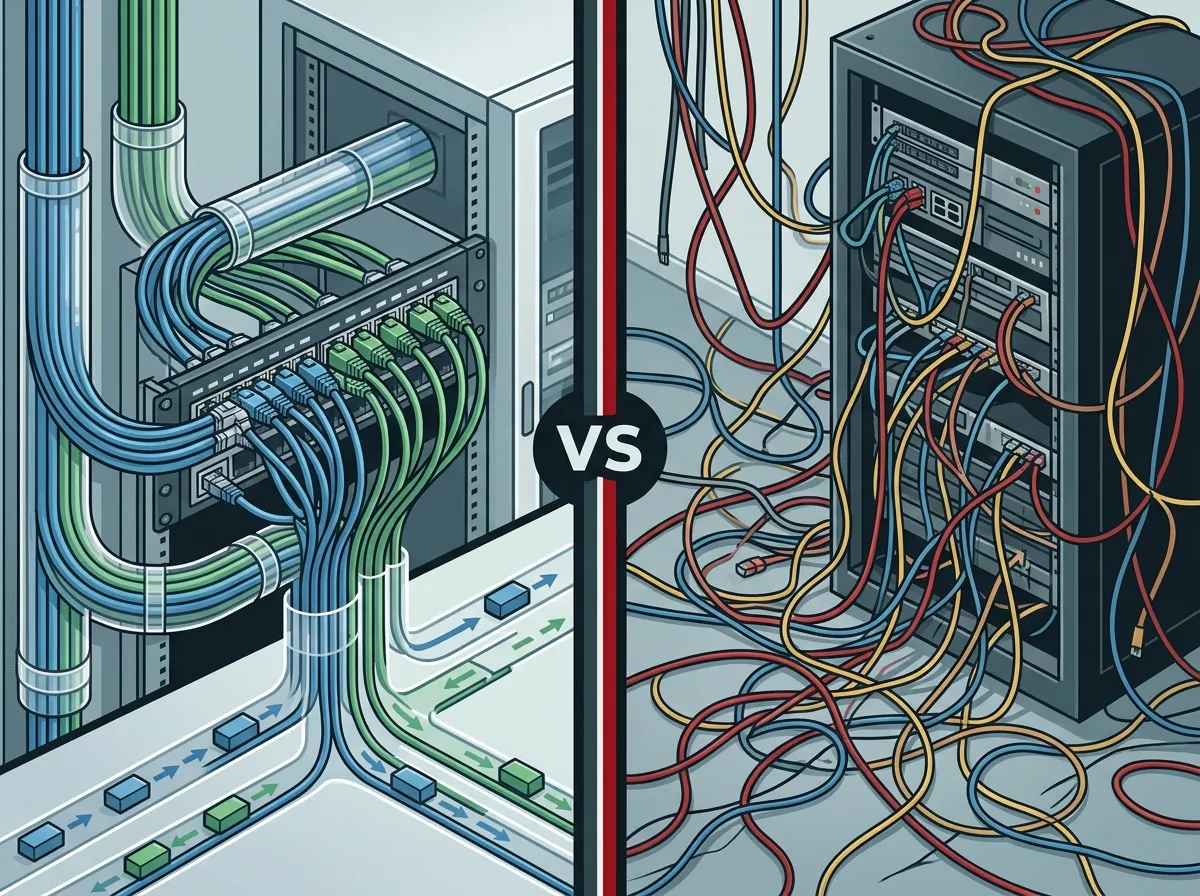
Let’s put both approaches side by side so you can see exactly where they differ. This quick comparison covers the areas that matter most to Tampa business owners, IT managers, and office managers:
| Feature | Structured Cabling | Ad-Hoc Wiring |
|---|---|---|
| Design Approach | Planned, standards-based | Reactive, unplanned |
| Scalability | Easy to expand without disruption | Difficult and costly to scale |
| Troubleshooting | Fast — documented and labeled | Slow — often trial and error |
| Downtime Risk | Low — reliable and tested | High — prone to failures |
| Long-Term Cost | Lower over time | Higher due to repeated fixes |
| Standards Compliance | TIA-568, BICSI certified | Typically non-compliant |
| Support for New Tech | Built for VoIP, fiber, cloud systems | Often incompatible with upgrades |
| Documentation | Full as-built drawings and labels | Rarely documented |
As you can see, structured cabling wins on almost every front. But let’s dig deeper into the areas that affect your business most.
Types of Cabling Used in Tampa Commercial Projects
One of the most common questions we hear from business owners is: “What type of cable do I actually need?” The answer depends on your speed requirements, building layout, and budget. Here’s a quick breakdown of the most common options used in commercial network cabling projects in Tampa:
| Cable Type | Speed Support | Best Use Case | Max Distance |
|---|---|---|---|
| Cat5e | Up to 1 Gbps | Basic office networks, voice | 100 meters |
| Cat6 | Up to 10 Gbps (short runs) | Data-heavy offices, VoIP, HD video | 55–100 meters |
| Cat6A | Up to 10 Gbps (full distance) | Enterprise environments | 100 meters |
| Fiber Optic | Up to 100 Gbps+ | Backbone runs, multi-floor buildings | Hundreds of meters to miles |
Most Tampa businesses doing new construction or renovations are choosing Cat6 as a minimum standard in 2026. It’s a smart future-proof investment. If you want to go even further, fiber optic cabling services for Tampa commercial buildings offer the fastest and most reliable backbone you can get. Check out this helpful guide on the 7 key differences between CAT5e and CAT6 cabling for Tampa businesses to help you decide.
Why Tampa Businesses Are Moving to Structured Cabling in 2026
Tampa’s commercial market is booming. New office buildouts, renovations, and multi-location expansions are happening all over the Bay area. That growth creates a clear need for reliable cabling infrastructure. Here are the top reasons local businesses are making the switch:
- VoIP phone systems require clean cabling. If your network cabling is messy or underperforming, your VoIP phone service will suffer too — dropped calls, jitter, and lag are often cabling problems, not phone problems.
- Cloud security cameras need solid infrastructure. Cloud security cameras and access control systems run over your network — and they need dependable, low-latency connections to work properly.
- Scalability is critical for growing businesses. Structured cabling lets you add desks, floors, or locations without tearing everything apart. As one local provider notes, it’s designed so businesses can add, replace, or move only what they need.
- Office renovations are a perfect opportunity. If you’re already remodeling, installing proper cabling at that moment saves significant money compared to retrofitting later.
- IT teams want documented systems. Nobody wants to spend hours chasing an unlabeled cable. A documented cabling system makes IT support faster and less frustrating.
It’s worth noting that the demand for structured cabling in Tampa is very real — Indeed currently lists 66 structured cabling jobs in the Tampa, FL area, reflecting just how active the local commercial cabling market is in 2026.
5 Key Scenarios Where Structured Cabling Clearly Wins
Not sure if your situation calls for a full structured cabling project? Here are five scenarios where it’s the obvious right choice for Tampa businesses:
- New Office Construction or Buildout: Starting fresh is the ideal time to install structured cabling. You get walls open, runs are clean, and the system is built right from day one. Learn more about whether you need structured cabling for a new office buildout in Tampa.
- Office Renovation or Tenant Improvement: Walls are already open during a remodel — this is the most cost-effective time to upgrade your cabling infrastructure.
- Multi-Location Franchise or Business Expansion: When you’re opening a second or third location, consistent structured cabling across sites makes management far simpler. Check out reliable network solutions for multi-location Tampa businesses.
- Upgrading to VoIP or Cloud Phone Systems: If you’re switching to a cloud-based phone system in Tampa, your network infrastructure needs to be solid enough to support it.
- Adding Cloud Security Cameras or Access Control: These systems run over your network. Poor cabling leads to camera lag, missed alerts, and access control failures — none of which you want in a commercial building.
When Ad-Hoc Wiring Might Seem Tempting (And Why It Still Loses)
Let’s be honest — ad-hoc wiring has one advantage: it feels cheaper upfront. If you need one cable run to a single workstation, you might not call a structured cabling contractor. That’s understandable. But for anything beyond the most basic, temporary setup, the short-term savings almost always disappear quickly.
Here’s what typically happens with unmanaged, ad-hoc cabling over time:
- Cable runs become impossible to trace, leading to long outages during troubleshooting
- Network performance degrades as more devices pile onto underpowered infrastructure
- Adding new users or systems requires starting almost from scratch
- Compliance and inspection issues arise during audits or building sales
- IT staff or contractors charge more to work in disorganized environments
Essentially, you pay less today and much more tomorrow. For any business that depends on reliable communications — which is every business — that’s a trade-off that rarely makes sense. If you’re curious about whether your current setup has these warning signs, take a look at these 9 signs your Tampa business needs structured cabling now.
How to Choose the Right Structured Cabling Contractor in Tampa
Choosing the right contractor matters a lot. Not all installers are equal, and a poor installation can cost you more than the original savings. Here’s what to look for when evaluating a structured cabling provider in the Tampa area:
- Florida state licensing — verify they are properly licensed for low-voltage work in Florida
- BICSI membership or certifications — BICSI-trained technicians follow industry best practices
- TIA-568 compliance — ensures your installation meets nationally recognized standards
- Full documentation provided — as-built drawings, cable labels, and test results should be standard
- Experience with commercial projects — office buildings, multi-tenant spaces, and campuses require specific expertise
- Support for telecom systems beyond cabling — the best partners can also help with VoIP, internet, and network services
For a deeper look at what separates great contractors from average ones, check out these 6 signs you found the best structured cabling contractor in Tampa. And if you’re wondering how long a project takes, this resource on how long structured cabling installation takes for a commercial building in Tampa is a great starting point.
How Structured Cabling Supports Your Entire Telecom Ecosystem
Here’s something many business owners don’t realize: structured cabling in Tampa isn’t just about internet speed. It’s the physical foundation that your entire telecom ecosystem sits on. That includes voice systems, data networks, wireless access points, security cameras, and access control. When the cabling is solid, everything above it works better.
Structured cabling supports VoIP phones and security cameras in 13 key ways — from reducing latency to enabling Power over Ethernet (PoE) for IP cameras and wireless access points. When you pair great cabling with the right dedicated fiber internet service in Tampa, you’re giving your business the best possible foundation for everything it does digitally.
Ideal Solutions Provider, a Tampa-based telecom and IT partner with over 24 years of experience, works with businesses to install structured cabling as part of a complete communications solution — including VoIP, internet, networking, cloud cameras, and access control. Their single-point-of-contact model means you’re not bouncing between vendors trying to figure out why things aren’t working together. You can follow them on Facebook or Instagram to see real project examples and client stories.
Structured Cabling Costs: What Tampa Businesses Should Expect
Cost is always part of the conversation, and it’s completely fair to want a realistic expectation. Here’s a general overview of cost factors for structured cabling projects in Tampa:
| Cost Factor | What Affects It | Typical Range |
|---|---|---|
| Cable type (Cat6 vs. fiber) | Fiber costs more per foot but lasts longer | Fiber is 2–4x cost of Cat6 per run |
| Number of data drops | More workstations = more drops needed | $100–$200+ per drop installed |
| Building complexity | Multi-floor, concrete, or older buildings cost more | Varies widely by project |
| Documentation and testing | Certified testing adds cost but is essential | Included in quality proposals |
| Project timing | New construction is cheaper than retrofit | New build = 20–40% less than retrofit |
The best approach is always to get a proper site survey and quote. A good contractor will walk your space, understand your needs, and provide a clear, itemized proposal. Watch educational content about what goes into these systems on the Ideal Solutions Provider YouTube channel to know what questions to ask when getting quotes.
Next Steps for Tampa Businesses Ready to Upgrade
If you’ve made it this far, you likely already know that structured cabling is the right answer for your Tampa business. The only question is: where do you start? Here’s a simple three-step path forward:
- Assess your current setup. Walk your office or facility with honest eyes. Is your current cabling labeled, documented, and organized? Or is it a tangle of mystery cables? Use this guide on how to plan network cabling installation in Tampa Bay to start thinking strategically.
- Define your needs. Are you adding staff? Moving offices? Upgrading to VoIP or fiber internet? Each of these triggers different cabling requirements. Understanding your needs before you call a contractor saves time and money.
- Partner with a trusted local expert. Look for someone who offers professional structured cabling services for Tampa businesses and can also support your broader telecom ecosystem — internet, VoIP, networking, and security.
The Verdict: Structured Cabling Wins Every Time for Tampa Businesses
There’s really no contest here. When you compare structured cabling to ad-hoc wiring on performance, reliability, scalability, long-term cost, and support for modern business technology, structured cabling wins across the board. Ad-hoc wiring might feel convenient in the moment, but it creates compounding problems that cost Tampa businesses real money and real productivity over time.
Whether you’re a small business owner setting up your first office, an IT manager overseeing a multi-site network upgrade, or a franchise operator expanding across Tampa Bay, investing in a properly designed and installed structured cabling system is one of the smartest technology decisions you can make. It sets the foundation for everything else — fast internet, clear VoIP calls, reliable security cameras, and seamless access control.
Ready to get your Tampa business wired the right way? Get in touch with our team at Ideal Solutions Provider for a free consultation, or give us a call at 813-388-4935 to talk through your cabling needs today. We’re here to help you build a communications infrastructure that works now and grows with you.
FAQs
Q: What is structured cabling and why does my Tampa business need it?
A: Structured cabling is a professionally designed wiring system that organizes all of your voice, data, and fiber connections into one clean, standards-based infrastructure. Tampa businesses need it because it reduces downtime, makes troubleshooting faster, and supports modern tech like VoIP phones, cloud security cameras, and high-speed internet — all running more reliably over a solid foundation!
Q: What types of cabling are used in commercial structured cabling projects in Tampa?
A: Most commercial projects in Tampa use Cat5e, Cat6, or fiber optic cabling depending on the speed and distance requirements. Cat6 is the most popular choice for new office installations in 2026 because it supports up to 10 Gbps and is a great future-proof investment, while fiber is ideal for backbone runs between floors or buildings.
Q: How much does structured cabling installation cost for a Tampa business?
A: Costs vary depending on the cable type, number of data drops, building complexity, and whether it’s new construction or a retrofit. A general estimate is $100–$200+ per data drop installed. The good news is that getting a free site survey and quote from a certified local contractor gives you a clear, itemized picture with no surprises.
Q: How do I choose a reliable structured cabling contractor in Tampa?
A: Look for a contractor with Florida low-voltage licensing, BICSI certifications, TIA-568 standards compliance, and a commitment to providing full documentation after installation. Bonus points if they can also support your broader telecom needs like VoIP, internet, and networking — it makes everything much easier to manage!
Q: Can structured cabling support VoIP phones and cloud security cameras?
A: Absolutely — and that’s one of its biggest advantages! Structured cabling provides the reliable, low-latency network connections that VoIP phone systems and cloud security cameras need to perform at their best. A well-designed system can even support Power over Ethernet (PoE), which powers IP cameras and wireless access points directly through the cable.