Key Takeaways
-
Cat 6A copper supports full 100-meter 10 Gigabit speeds, making it ideal for businesses planning multi-gigabit Wi-Fi and expecting long-term network growth without costly rewiring.
-
Power over Ethernet (PoE) cabling eliminates the need for separate power outlets by sending both data and power through a single cable, reducing installation complexity for phones, cameras, and access points.
-
Single-mode fiber should be installed now for campus links and building-to-building connections even if not immediately needed, as it provides a cost-effective upgrade path for future bandwidth demands.
-
Certification testing after installation is critical—request test reports at handover to verify performance against standards and create a reference for troubleshooting future network issues.
-
Cat 6 is a budget-friendly option supporting 1 Gb/s up to 100 meters for typical office needs (desks, phones, printers), though 10 Gb/s on Cat 6 is commonly limited to 55 meters.
-
A well-designed structured cabling system with proper pathway capacity, clear labeling, quality connectors, and correct cable routing performs better than high-speed cable alone installed poorly.
Let’s be honest: nobody gets excited about the wires hiding in their walls. But here’s the thing. Those wires decide how fast your Wi-Fi feels, how clear your phone calls sound, and whether your security cameras stay online. If your team has ever groaned about a slow network, the cable behind the wall is often part of the story.
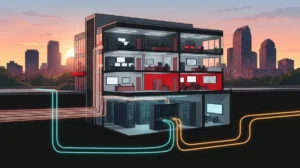
The good news is that high speed cabling solutions are easier to understand than you might think. In business telecom, the term means a standards-based structured cabling system. That includes copper and fiber cable, connectors, patch panels, pathways, and telecom-room gear. Together, they carry Ethernet, voice, Wi-Fi access point, camera, and building-system traffic.
Whether you run a small Tampa shop, manage IT for a growing company, or oversee a dozen franchise sites, this guide walks through eight practical options. We’ll keep it simple, friendly, and jargon-light. Grab a coffee, and let’s dive in.

Why High Speed Cabling Solutions Matter for Your Business
Think of your cabling like the plumbing in your building. Nobody admires the pipes, but everyone notices when the water pressure drops. A good system supports today’s needs and leaves room to grow.
According to the Ethernet Alliance’s 2025 Ethernet Roadmap, enterprise and campus networks ship over one billion Ethernet ports every year. Most of those access-layer ports use copper BASE-T. That tells us copper is still the everyday workhorse, while fiber handles the heavy lifting on uplinks and backbones.
Here is what smart cabling helps you do:
- Keep VoIP calls clear and steady
- Feed Wi-Fi access points with fast, reliable connections
- Power phones, cameras, and sensors over a single cable
- Make moves, adds, and changes simple instead of stressful
- Avoid expensive rewiring when your business grows
If you want a deeper primer, our post on what structured cabling is for your business network is a great place to start. You can also read the general overview of structured cabling for background.

1. Category 6A Copper for Full-Distance 10 Gigabit
If you are wiring a new office and want copper that will stay useful for years, Category 6A is a top pick. It supports 10GBASE-T across the full 100-meter channel. That means a desk at the far end of a long hallway can still get 10 gigabit speeds.
Cat 6A cable is thicker and stiffer than lower categories. It also takes more space in pathways. Still, many businesses find the extra room worth it for the headroom it provides.
Cat 6A is a smart fit when you:
- Plan to run multi-gigabit Wi-Fi access points
- Expect heavy file transfers or video work
- Want a longer service life from your cabling investment
Curious about how it stacks up against other options? Check out our guide on choosing between Cat6 and Cat6A for your office.
2. Category 6 Copper for Everyday Business Needs
Category 6 is the friendly middle ground. It supports 1 Gb/s Ethernet up to 100 meters, which covers most desks, phones, and printers just fine.
One thing to know: 10 Gb/s over Cat 6 depends on distance and installation quality. It is commonly limited to about 55 meters. So if you only need gigabit speeds at the desk, Cat 6 can be a budget-friendly choice.
Many small businesses love Cat 6 because it balances cost and performance. Our post on why CAT6 cabling is a smart choice for Tampa businesses explains the details.
3. Multimode Fiber for Short In-Building Links
Fiber uses light instead of electricity, and it shines at higher capacity. Multimode fiber is common for shorter in-building links, such as connecting a main telecom room to another floor.
It is a good choice when you want faster uplinks between switches without the cost of longer-reach optics. The right fiber type and reach depend on the Ethernet optics you choose, so your installer should match them carefully.
Benefits of multimode fiber include:
- High capacity for switch-to-switch links
- Immunity to electrical interference
- A clear upgrade path as speeds increase
4. Single-Mode Fiber for Long Distances and Big Growth
When you need to reach across a campus, between buildings, or to a carrier handoff, single-mode fiber is the go-to option. It is built for longer distances and capacity upgrades over time.
Many businesses also choose single-mode for backbone runs because it leaves room for future speeds. You may not need it today. But installing it now can save a big headache later.
To see how fiber fits into a full plan, read how to choose fiber cabling for your business network or explore fiber optic cabling services for commercial buildings in Tampa.
5. Copper vs. Fiber: A Quick Comparison
Not sure which way to go? This table gives you a simple side-by-side look.
| Option | Typical Best Use | Distance Notes | Good to Know |
|---|---|---|---|
| Cat 6 | Desks, phones, printers | 1 Gb/s up to 100 m; 10 Gb/s commonly about 55 m | Budget-friendly for everyday use |
| Cat 6A | Wi-Fi access points, power users | 10GBASE-T up to 100 m | Thicker cable; needs more pathway space |
| Multimode Fiber | Short in-building links | Depends on optics and application | Great for switch uplinks |
| Single-Mode Fiber | Campus links, long runs, backbones | Suited to longer distances | Strong upgrade path |
Remember that the 100-meter figure for copper refers to the full channel, including the permanent link and patch cords. Always check the applicable standard and your equipment specifications.
6. Power over Ethernet-Ready Cabling
Here is a little magic trick. Power over Ethernet (PoE) sends both data and power down a single copper cable. That means one cable can run a wireless access point, a VoIP phone, or a camera without a nearby outlet.
Good PoE planning looks at a few things:
- The PoE class your devices need
- Cable bundle heating when many powered cables run together
- Cable distance from the switch
- The total power budget of your equipment
This is especially helpful for phones and cameras. Our article on how structured cabling supports VoIP and cameras shows how everything fits together. If you are adding cameras, see also what security cameras really do for your business.
7. A Well-Designed Structured Cabling System
The best cable in the world can still fail if the design is sloppy. A structured system separates horizontal cabling (telecom room to work area) from backbone cabling (between telecom rooms, buildings, or network facilities).
Strong design includes:
- Enough pathway and rack capacity for growth
- Clear labeling and documentation
- Proper bend radius and cable routing
- Quality connectors, patch panels, and patch cords
Performance depends on the whole channel, not just the cable jacket. That is why installation quality matters so much. Learn more about how to plan network cabling installation in Tampa Bay, and steer clear of common issues in 12 structured cabling mistakes that hurt your business.
8. Certification Testing and Ongoing Support
The last piece is easy to overlook. After installation, every link should be tested against the specified category or fiber performance. Certification testing gives you proof that the system works as designed. It also becomes a handy reference when troubleshooting later.
Ask your installer for test reports at handover. Those reports help you catch weak links before they cause slow speeds or dropped calls. Ongoing support also matters, because networks evolve and moves, adds, and changes never stop.
If you are weighing DIY against hiring a pro, our comparison of DIY vs. professional cabling for Tampa offices can help you decide.
How to Pick the Right High Speed Cabling Solutions
You do not need to buy the highest headline speed. You need the right fit. Here is a simple process to follow.
- List your devices. Count desks, phones, access points, cameras, and access control points.
- Estimate bandwidth. Consider today’s needs and where you expect to be in five to ten years.
- Measure distances. Note how far each run travels from the telecom room.
- Plan for PoE. Decide which devices need power over the cable.
- Set a budget. Balance upfront cost with long-term flexibility.
- Confirm standards. Check current TIA, ISO/IEC, and IEEE requirements with your designer and installer.
Different businesses will land in different places. Here is a quick look at how needs often match up.
| Business Type | Common Priorities | Typical Approach |
|---|---|---|
| Small office | Cost control, simple growth | Cat 6 to desks, fiber only if needed |
| Mid-sized company | Wi-Fi density, PoE, uptime | Cat 6A horizontal, fiber backbone |
| Multi-building campus | Long links, high capacity | Single-mode fiber between buildings |
| Multi-location franchise | Consistency, easy support | Repeatable standard design per site |
A quick note on the big numbers you may see online. Data centers can use fiber and copper for 100G, 400G, and even 800G links. Those are not typical needs for every office LAN. Most businesses do great with a smart mix of Cat 6 or 6A and fiber uplinks.
Signs It Is Time to Upgrade Your Cabling
Sometimes the network tells you it is unhappy. Watch for these clues:
- Wi-Fi drops even though your internet plan is fast
- Phones crackle or calls drop unexpectedly
- Cables are tangled, unlabeled, or held together with tape
- Adding a new desk or camera feels like a major project
- Your building still runs older Cat 5 cable
If any of that sounds familiar, take a look at 9 signs your Tampa business needs structured cabling now and 7 signs your business network needs an upgrade. Also, cabling only helps if your internet service keeps up, so review your business high speed internet services options too.
Work With a Partner Who Handles It All
Cabling touches almost everything in your telecom setup. That is why many businesses like having one team coordinate it all. Ideal Solutions Provider is a Tampa-based telecom and IT partner with over 24 years of experience. They serve businesses nationwide and work with 35+ vetted suppliers, so you get one point of contact instead of a pile of vendors.
From consultation and installation to ongoing support, they can plan your structured cabling services alongside phones, internet, networking, cameras, and access control. If you want to see who is behind the work, you can follow along on YouTube or say hello on Facebook.
Also, your cabling connects to your Internet Service Provider service, so it helps to plan both at the same time. Our guide on the best cabling options for business networks in Tampa is a helpful next read.
Final Thoughts
Great high speed cabling solutions are not about chasing the biggest number. They are about matching cable type, fiber, PoE, design, and testing to how your business really works. Start with your needs, leave room to grow, and insist on quality installation and certification.
When you are ready to talk it through, we would love to help. Contact us for a free consultation, or call us to speak with a friendly expert about your cabling plans.
FAQs
Q: What is high speed cabling for a business network?
A: It is a standards-based structured cabling system made of copper and fiber cable, connectors, patch panels, and pathways. It carries Ethernet, voice, Wi-Fi, camera, and building-system traffic across your workplace. Think of it as the foundation that keeps everything else running smoothly.
Q: Should I install Cat 6, Cat 6A, or fiber optic cabling?
A: It depends on your needs. Cat 6 works well for gigabit desks, Cat 6A supports 10 Gb/s over the full 100 meters, and fiber shines for backbones, campus links, and long distances. A quick chat with a cabling pro can help you match the right option to your budget and growth plans.
Q: How far can Cat 6A carry 10-gigabit Ethernet?
A: Cat 6A supports 10GBASE-T up to 100 meters, measured across the full channel including patch cords. Cat 6 can sometimes do 10 Gb/s too, but it is commonly limited to about 55 meters and depends on the installation.
Q: When should a business use fiber instead of copper?
A: Choose fiber for building backbones, links between buildings, longer distances, and higher-capacity uplinks. Multimode fiber fits shorter in-building runs, while single-mode is better for longer reaches and future upgrades.
Q: How is structured cabling tested after installation?
A: Installers run certification tests on each link to confirm it meets the specified copper category or fiber performance. You should receive test reports at handover, which also help with future troubleshooting.