
Key Takeaways
-
Florida generally requires a licensed contractor for in-structure low-voltage wiring, including network and telecom cabling; the Limited Energy Systems Specialty license covers qualifying work under 98 volts.
-
Verify any contractor's Florida license and confirm its scope covers your project by searching the license number on MyFloridaLicense.com, and request proof of insurance.
-
Low-voltage work is not automatically exempt from permitting in Florida, so confirm requirements with the City of Tampa or Hillsborough County building department before work begins.
-
Match cable type to the job: Cat6 suits everyday office data and VoIP, Cat6A fits higher-capacity needs like Wi-Fi access points, and fiber works best for longer runs between closets or buildings.
-
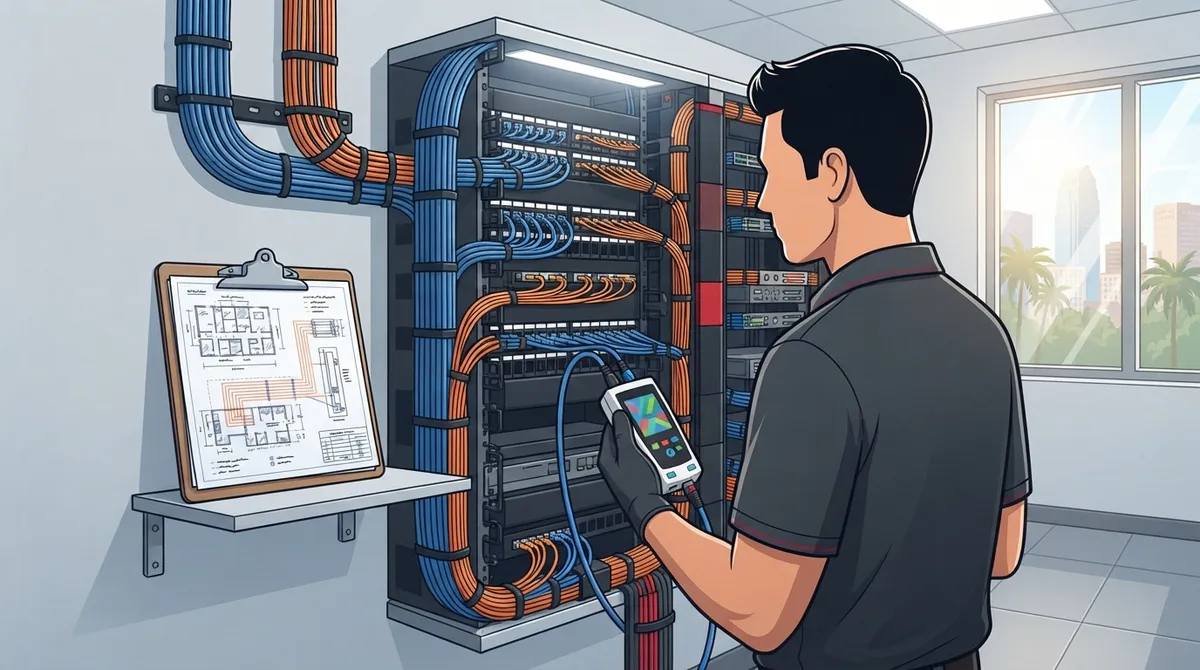
Insist on testing, labeling, and documentation such as test results and as-built drawings, since these records make troubleshooting and future moves far easier.
-
Plan cabling for growth and for all systems at once, including VoIP phones, cameras, and door access, so you manage one network instead of several separate ones.
If you walk into a Tampa office and see a tidy network closet, you are probably looking at a business that sleeps well at night. If you see a tangle of cables, you are probably looking at a business that has slow Wi-Fi, dropped calls, and a few mystery cords nobody dares to unplug. Low voltage cabling Tampa FL businesses rely on is the quiet foundation behind it all. It carries your data, your VoIP phones, your Wi-Fi, your security cameras, and your door access systems.
In this friendly guide, we will walk through what low voltage cabling really is, what Florida expects from the people who install it, how to choose the right cable, and what a good project looks like from start to finish. Whether you run a small shop, manage an office, lead IT for a growing company, or oversee several franchise locations, you will find plain answers here. No jargon wall. Just helpful, practical steps you can use in 2026.

What Low Voltage Cabling Means for a Tampa Business
Low voltage cabling is the physical wiring that carries signals instead of heavy electrical power. In a business telecom setting, it usually includes several kinds of systems:
- Ethernet cabling for computers, printers, and network devices
- Phone and VoIP wiring for desk phones and conference equipment
- Fiber-optic links between floors, closets, or buildings
- Cabling for Wi-Fi access points
- Cabling for security cameras and access control
- Audiovisual wiring for meeting rooms and displays
Think of it like the plumbing in your building. Nobody admires it, but everything stops working when it goes wrong. A well-built system is often called structured cabling, which simply means a planned, organized, standards-based wiring setup that can support many services over time.
If you want a deeper starter, our guide on what structured cabling is for your business network explains the basics in plain language.
Why Low Voltage Cabling Matters More in 2026
Today, almost every device in your office wants a network connection. Phones run over the internet. Cameras stream to the cloud. Door readers talk to cloud platforms. Even meeting room screens need a steady link. When the wiring behind all that is weak, everything feels slow or unreliable.
A smart low voltage cabling Tampa FL plan gives you a few clear benefits:
- Converged voice and data. Phones, computers, and cameras can share one well-built network.
- Fewer surprises. Clean installs mean fewer random dropouts and easier troubleshooting.
- Room to grow. Extra pathways and spare capacity make future moves, adds, and changes much easier.
- Better results from your internet. Fast service does little good if old cabling holds it back.
The right design depends on your building layout, bandwidth needs, equipment, and growth plans. There is no single recipe that fits every office, and a good installer will say so.
Florida Licensing: What Tampa Businesses Should Know
This part matters, and it is easy to overlook. According to Florida’s Department of Business and Professional Regulation (DBPR), installing low-voltage wiring inside a structure, including computer-network and telecommunications wiring, generally requires an appropriately licensed contractor.
The state points to the Limited Energy Systems Specialty license as the specific license for qualifying work under 98 volts (RMS). Other listed license categories may also authorize this kind of work. DBPR also notes that telecommunications and fiber-optic work requires appropriate licensure unless a stated public-service or utility-company exception applies.
That sounds technical, so here is the friendly takeaway: before you sign anything, verify the contractor’s license and confirm that its scope covers your planned work. You can look up Florida licenses through the state’s licensing portal at MyFloridaLicense.com.
A Quick License Check Routine
- Ask the contractor for their Florida license type and number.
- Search that number on the state licensing website.
- Confirm the license is active and fits the type of work you need.
- Ask for proof of insurance as well.
- Put the license details in your project file for future reference.
It takes about ten minutes, and it can save you from headaches with insurance, inspections, and warranty questions later.
Permits and Inspections in Tampa and Hillsborough County
Permit rules are another spot where it pays to ask first. A Florida Building Code interpretation states that low-voltage systems are not categorically exempt from permitting. In other words, you cannot assume that low voltage work never needs a permit.
Whether your project needs a permit depends on the scope of work and local enforcement rules. Before work begins, confirm current requirements with the City of Tampa or the relevant Hillsborough County building department. A professional contractor should already know the local process and help you handle it.
We cannot give you a one-size-fits-all answer here, and neither should anyone else. Rules can change, and projects vary. A quick call to the right building department is always the safest move.
Choosing the Right Cable: Copper, Fiber, and Everything Between
One of the biggest questions we hear is, “Which cable should I use?” The honest answer is, it depends on the job. Cable choice should match the application, the distance, the environment, and your budget.
| Cable Type | Common Use | Good to Know |
|---|---|---|
| Cat5e | Basic office connections | Still found in older buildings; may limit future upgrades |
| Cat6 | Everyday office data and VoIP | A popular, balanced choice for many offices |
| Cat6A | Higher-capacity connections, Wi-Fi access points | Built for faster speeds and more demanding setups |
| Fiber (multimode or single-mode) | Longer runs, building-to-building links, high-capacity backbones | Great for distance and capacity between closets or buildings |
Copper Ethernet usually handles the connections out to endpoints like desks and cameras. Fiber is commonly used for longer runs or higher-capacity links. Many offices use both, with fiber linking network closets and copper reaching the desks.
Want to compare options in more detail? These guides can help: Cat5e vs. Cat6 for offices in 2026, how to choose between Cat6 and Cat6A, and copper vs. fiber for low voltage cabling.
Don’t Forget Fire Ratings and Pathways
Cable fire rating and installation pathway must be selected to meet applicable code and building conditions. For example, cable running through plenum spaces, risers, or conduit may need different jacket ratings. This is one more reason to work with a licensed professional instead of guessing.
What a Good Commercial Cabling Project Looks Like
A strong project follows a clear path. Here is what most Tampa businesses can expect when the work is done right:
- Site survey. The installer walks your space, looks at the layout, and asks how you use your network now and what you plan to add.
- Design and pathway planning. Cable routes, rack locations, and closet needs are mapped out.
- Permit and license check. Requirements are confirmed with the local building department.
- Installation and termination. Cables are pulled, secured, and connected to jacks and patch panels.
- Labeling. Every cable and port is labeled so future changes are simple.
- Testing. Each run is tested to confirm it performs properly.
- Documentation. You receive test results and, ideally, as-built drawings.
That last step is the one many businesses forget to ask about, and it is a big deal. Good documentation helps with troubleshooting, future moves, adds, and changes. You can learn more about it in our post on building structured cabling documentation that works, and about labeling in 10 network cable labeling tips that save time in 2026.
Testing, Labeling, and Racks: The Little Things That Pay Off
Testing is how you know the work is solid. A tester checks each run for proper connections and performance, and the results become part of your record. Our article on cable testing and certification mistakes to avoid shows what to watch for.
Rack and closet planning matters too. A neat, well-ventilated rack with room to expand keeps equipment healthy and makes service calls faster. If you are curious how that part works, see how network rack installation works for businesses. And for tidy cable runs overall, 9 cable management services every business needs in 2026 is a handy read.
Low Voltage Cabling for Phones, Cameras, and Door Access
Here is something that often surprises new clients: your cabling plan should think about more than computers. VoIP phones need steady network connections. Cloud security cameras need reliable links and enough bandwidth. Cloud-based door readers also depend on a stable network.
When all of these share one thoughtfully planned cabling system, support gets easier because there is one network to understand instead of several separate ones. If you are weighing these services, you may like our pieces on security camera cabling for business, access control cabling choices that pay off, and how structured cabling supports VoIP and cameras.
What Does Low Voltage Cabling Cost in Tampa?
This is the question everyone asks, and we want to be honest with you. We did not find a reliable Tampa-specific price benchmark we could stand behind, so we will not hand you a made-up number. Costs depend on several things:
- The number of cable runs and how far they travel
- The type of cable you choose, such as Cat6, Cat6A, or fiber
- Ceiling type, wall construction, and how hard the pathways are to reach
- Whether new racks, patch panels, or conduit are needed
- Testing, labeling, and documentation requirements
- Permit needs and project timing
The best way to get a real number is a site visit and a written scope. Our guide on 10 factors that shape network cabling installation cost goes deeper, and 12 cabling expenses for a new office to budget helps with planning.
Common Mistakes to Avoid
After years in this business, a few patterns show up again and again. Here are the ones to dodge:
- Skipping the license check and hiring the lowest bidder
- Cabling for today’s needs only, with no room to grow
- Mixing old and new cable without a plan
- Leaving cables unlabeled
- Skipping testing and documentation
- Forgetting to ask about permits
For more detail, take a look at 12 structured cabling mistakes that hurt your business and 5 mistakes to avoid when hiring cabling installers.
How to Choose a Low Voltage Cabling Partner in Tampa
A good partner does more than pull wire. They listen, plan, and stay around after the job is done. Look for these signs:
- A valid Florida license that fits the work
- A clear site survey and written scope
- Straight answers about permits and inspections
- Testing, labeling, and documentation included
- Support for related services, such as VoIP, internet, cameras, and access control
That last point matters if you do not want to juggle several vendors. Ideal Solutions Provider is a Tampa-based telecom and IT partner with over 24 years of experience. We handle structured cabling services alongside phones, internet, networking, cameras, and access control, so you have one point of contact from consultation through ongoing support. If you are still shopping around, our guide to finding a reliable structured cabling contractor in Tampa shares more tips.
Planning for Multi-Location and Franchise Sites
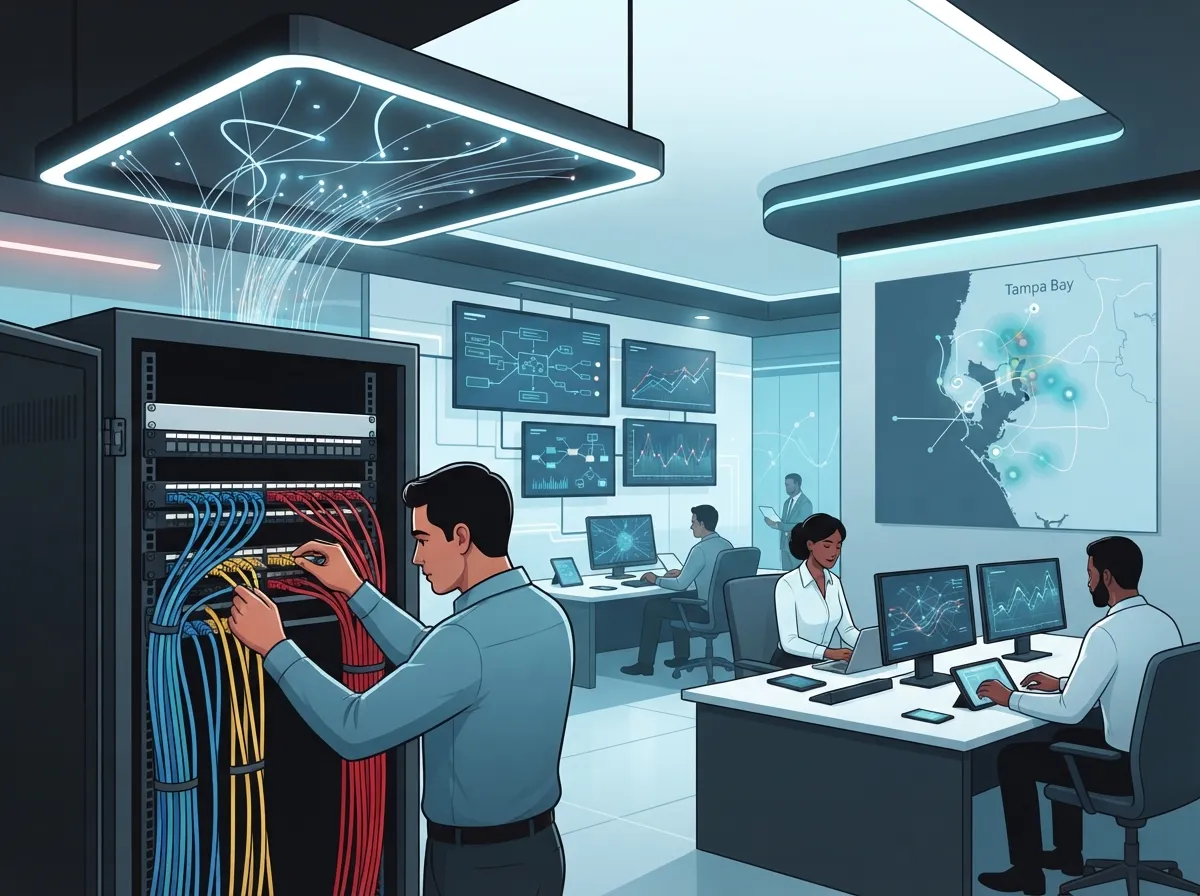
If you run several locations, consistency is your best friend. Using the same cabling standards, labeling style, and documentation at every site makes support much simpler, and new sites open faster. A single partner who can work across Tampa Bay and nationwide helps keep every location on the same page. Our post on multi-location telecom solutions Florida firms need covers that topic well.
Ready to Get Your Cabling Right?
Low voltage cabling is not the flashiest part of your business, but it holds up almost everything else. Plan it well, hire a licensed professional, confirm permit needs with your local building department, and insist on testing, labeling, and documentation. Do that, and your network will quietly do its job for years.
If you would like a friendly second set of eyes on your current setup or a new project, we would love to help. Contact our Tampa team to schedule a free consultation, or call us at 813-388-4935 to talk it through. You can also follow along with tips and updates on our YouTube channel.
FAQs
Q: Does Florida require a license to install commercial data or telecom cabling?
A: Yes, in most cases. Florida DBPR guidance says in-structure low-voltage wiring, including computer-network and telecom wiring, requires an appropriate license, and the Limited Energy Systems Specialty license covers qualifying work under 98 volts. Always verify your contractor’s license and make sure it covers your planned work.
Q: Do I need a permit for low voltage cabling in Tampa or Hillsborough County?
A: It depends on the project and local rules, so it is best to ask. A Florida Building Code interpretation says low-voltage systems are not automatically exempt from permitting. Check with the City of Tampa or the Hillsborough County building department before work starts.
Q: What is the difference between Cat6, Cat6A, and fiber for a business?
A: Cat6 is a popular choice for everyday office data and VoIP, while Cat6A supports more demanding, higher-capacity connections like Wi-Fi access points. Fiber is commonly used for longer runs and high-capacity links between closets or buildings. The best mix depends on your layout, bandwidth needs, and growth plans.
Q: How much does commercial low voltage cabling cost in Tampa, Florida?
A: Prices vary quite a bit, and we do not want to guess. Cost depends on the number of runs, cable type, building conditions, racks, testing, and permit needs. A site survey and written scope are the best way to get an accurate quote.
Q: What should a cabling contractor give me when the job is finished?
A: You should receive tested, labeled cabling and clear documentation, such as test results and as-built drawings. These records make troubleshooting and future changes much easier. If a contractor skips them, that is worth asking about before you sign.





