

Key Takeaways
-
Structured cabling is a planned, labeled, and tested system that supports voice, data, and video, unlike old-school point-to-point wiring that makes adding or moving devices difficult.
-
Insist on testing and certification for every link, with copper checked for insertion loss, return loss, and crosstalk, and fiber checked for length, polarity, and optical loss.
-
Ask for full documentation at handoff, including test results, cable IDs, port schedules, and as-built drawings, so future troubleshooting and changes are faster.
-
Choose cable types by need: Cat 6 suits standard offices, Cat 6A offers more bandwidth headroom for growth and PoE devices, and fiber is best for backbone and building-to-building links.
-
Great cabling alone does not guarantee speed, since switches, routers, cable category, link length, and installation quality all affect performance.
-
Verify that any provider follows standards like TIA-568, TIA-606, and ISO/IEC 11801 along with local fire and building codes, especially for plenum spaces.
Let’s be honest: nobody gets excited about the wires inside their walls. But here’s a little secret. Those wires decide whether your phones sound crisp, your Wi-Fi stays steady, and your security cameras actually record. Think of cabling as the plumbing of your office. When it works, you never think about it. When it fails, everyone notices.
That’s where structured cabling services come in. Instead of a tangled mess of random cables, you get one planned, labeled, tested system that supports voice, data, video, and more. It’s the quiet hero behind every healthy business network.
Whether you run a small Tampa office, manage IT for a growing company, or oversee several franchise locations, this guide walks through 12 services you should expect from a good provider. We’ll keep it simple, friendly, and jargon-light. Ready? Let’s untangle this together.
What Are Structured Cabling Services?
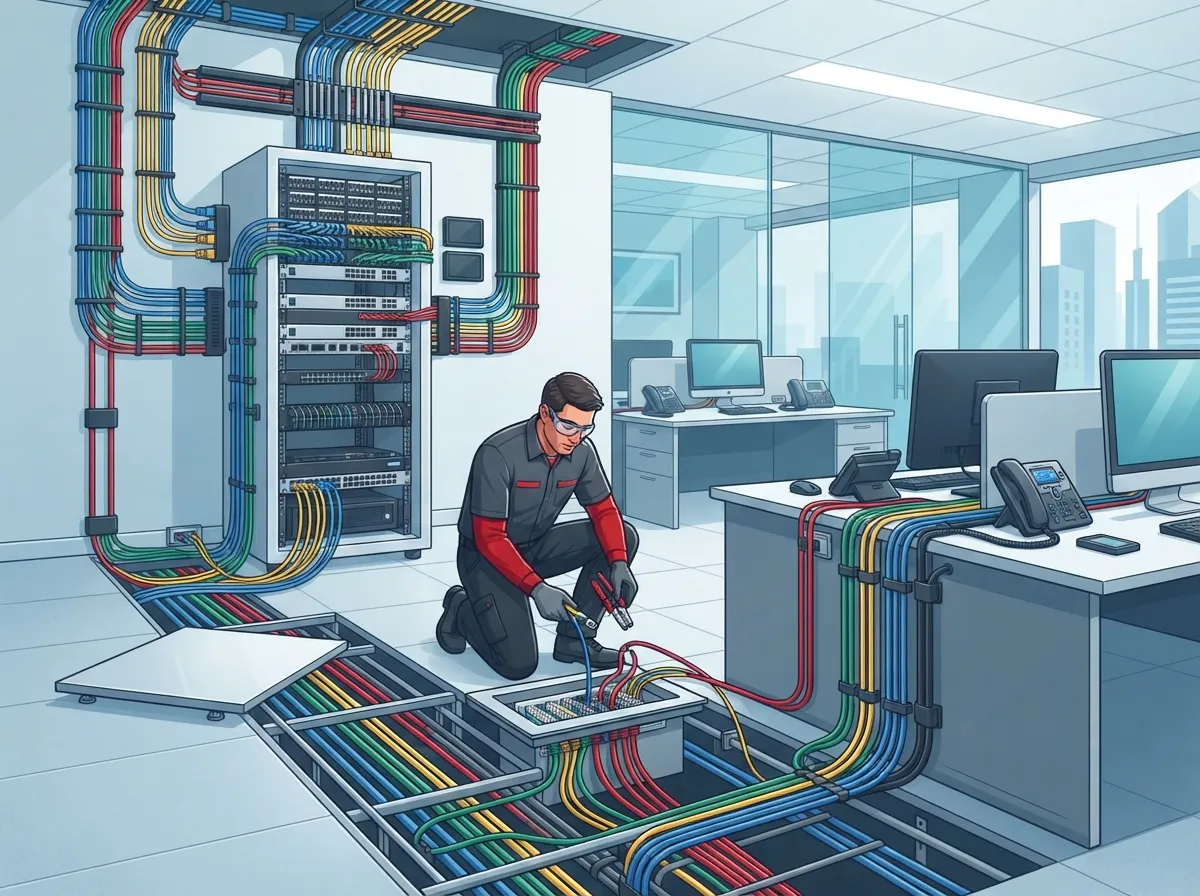
Structured cabling services cover the planning, installation, testing, and documentation of a standardized cabling system. According to the overview of structured cabling, it is a planned system of copper and fiber cabling, pathways, and hardware that supports voice, data, and video.
Unlike old-school point-to-point wiring, structured cabling uses organized distribution points. That means you can add a desk, move a phone, or plug in a new camera without ripping up the building. If you want a deeper comparison, see Structured Cabling vs. Ad-Hoc Wiring: Which Wins for Tampa?
12 Structured Cabling Services Worth Asking About
1. On-Site Survey and Needs Assessment
Every good project starts with a walk-through. A technician looks at your floor plan, ceiling space, telecom closets, and equipment needs. They also ask how you plan to grow.
This step prevents expensive surprises. It’s like a doctor’s checkup before treatment. Skip it, and you risk guessing your way through the project.
2. Network Design and Pathway Planning
Next comes the blueprint. Designers map out where cables will travel, where racks will live, and how many outlets each room needs.
Good design follows a simple hierarchy. A main distribution area connects to smaller telecom rooms, which then serve work areas. Planners also consider bend radius, cable fill, separation from electrical lines, and cooling for equipment rooms. For help getting started, read How to Plan Network Cabling Installation in Tampa Bay.
3. Horizontal Cabling Installation
Horizontal cabling runs from the telecom room to each work area, like desks, conference rooms, and reception. This is the part most people picture when they think of cabling.
It usually uses copper twisted-pair cable to feed computers, VoIP phones, printers, and wireless access points. Clean routing and neat termination here make life easier for years.
4. Backbone and Riser Cabling
Backbone cabling links your telecom rooms, floors, or even separate buildings. It acts like the highway that carries traffic between neighborhoods.
Because these links carry lots of data, many businesses choose fiber for them. Fiber handles longer distances and higher bandwidth without the interference issues copper can face.
5. Copper Cabling: Cat 6 and Cat 6A
Copper twisted-pair remains the workhorse of office networks. Cat 6 and Cat 6A are common choices for everyday Ethernet and devices powered over Ethernet (PoE).
Here is a quick comparison to help you picture the options:
| Cable Type | Best For | Typical Strengths | Things to Consider |
|---|---|---|---|
| Cat 6 | Standard offices, VoIP phones, Wi-Fi access points | Good performance, lower cost | Shorter reach at the highest speeds |
| Cat 6A | Growing offices, high-bandwidth needs, PoE devices | Higher bandwidth headroom, better for future upgrades | Thicker cable, higher material cost |
| Fiber (multimode or single-mode) | Backbone links, between buildings, long distances | Very high bandwidth, immune to electrical interference | Needs specialized termination and testing |
Curious about the details? Check out How to Choose Between Cat6 and Cat6A for Your Office and 14 Cat6 Cabling Facts Every Business Owner Should Know.
6. Fiber Optic Cabling Services
Fiber sends data as light, which means it can travel far and carry a lot. Analyst estimates suggest fiber made up roughly 64% of structured cabling market revenue in 2025, showing how popular it has become.
For most offices, fiber shines in backbone runs and links between buildings. For more on picking the right type, see How to Choose Fiber Cabling for Your Business Network.
7. Racks, Patch Panels, and Cable Management
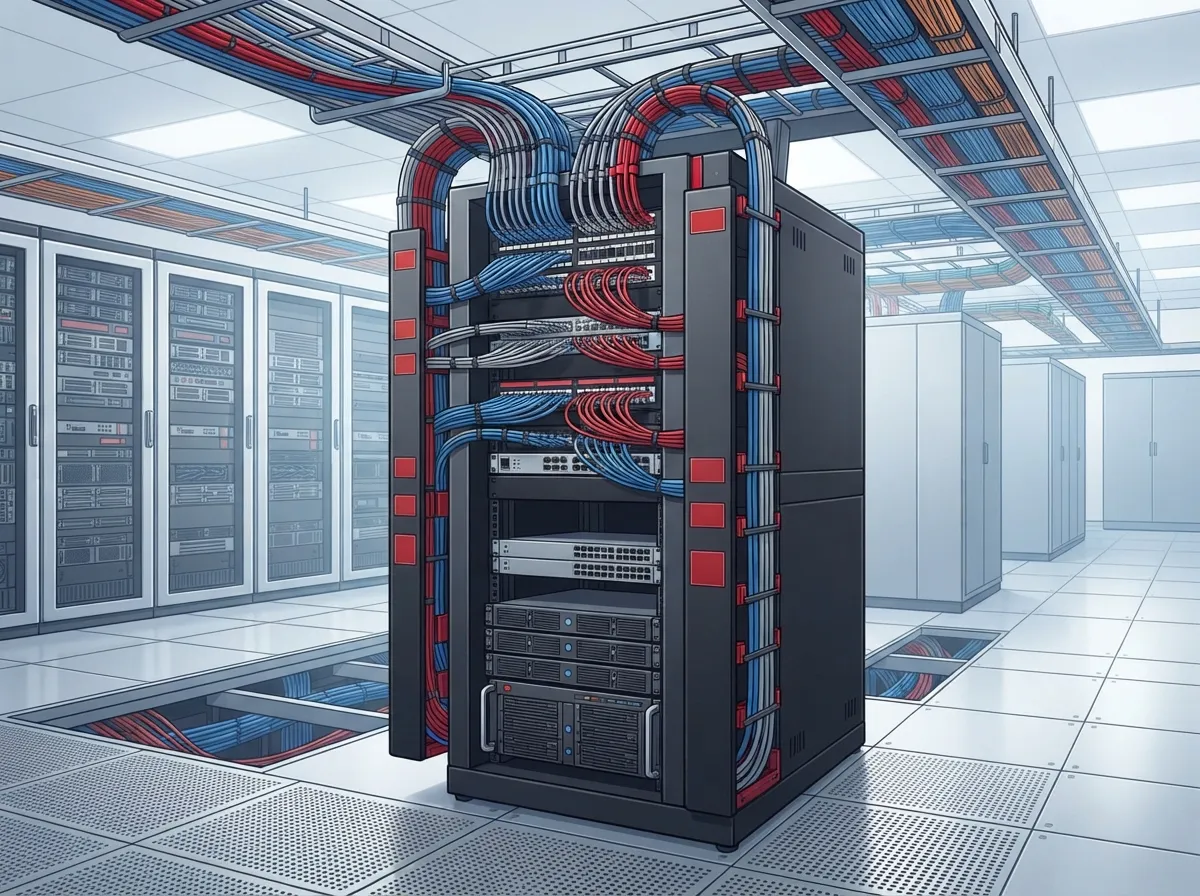
Ever seen a telecom closet that looks like a bowl of spaghetti? That’s what happens without proper racks, patch panels, and cable management.
Professional installers mount equipment neatly, route cables with care, and leave room for growth. It looks tidy, but it also makes troubleshooting much faster. Learn more in How to Set Up Cable Management for Business Networks.
8. Termination and Labeling
Termination means connecting the cable ends to jacks and patch panels. Done wrong, even great cable performs poorly. Done right, it keeps signals clean.
Labeling is just as important. Each cable gets a clear identifier at both ends. When something breaks at 4:55 on a Friday, you’ll be very glad every cable has a name.
9. Testing and Certification
Testing proves your cabling works the way it should. For copper, technicians check things like insertion loss, return loss, and crosstalk. For fiber, they verify length, polarity, and optical loss.
Certification gives you a documented pass or fail for every link. It also protects you if a problem pops up later. If you want to dig in, read 14 Cabling Certification Requirements You Can’t Skip.
10. Standards and Code Compliance
Professional installers follow recognized standards. The TIA-568 series covers cabling performance and layout, TIA-606 covers labeling and administration, and ISO/IEC 11801 covers generic cabling.
Local electrical, fire, and building codes matter too. Things like firestopping, grounding, and proper cable types for plenum spaces depend on your building and location. A good contractor handles this so you don’t have to.
11. Documentation and As-Built Drawings
When the job ends, you should get more than a handshake. Expect test results, cable IDs, port schedules, and as-built drawings.
This paperwork is gold for IT managers and office managers. It lets you troubleshoot quickly, add equipment confidently, and hand off the network to a new team member without a headache. See How to Build Structured Cabling Documentation That Works.
12. Ongoing Support, Moves, Adds, and Changes
Businesses change. People move desks, offices expand, and new devices appear. A strong provider helps with moves, adds, and changes long after the first install.
This is where having a single partner really pays off. Ideal Solutions Provider, a Tampa-based telecom and IT partner with over 24 years of experience, handles cabling alongside phones, internet, networking, cameras, and access control. One call covers it all, which saves time and finger-pointing.
Why Structured Cabling Matters More Than Ever
Demand for cabling keeps growing. BSRIA figures reported by Cabling Installation say the global structured cabling market grew 21% in 2025 to $9.08 billion. Mordor Intelligence estimates it will reach $21.26 billion by 2031.
A quick note: these numbers vary by research firm and are heavily influenced by data centers, so treat them as market signals, not office-install counts. Still, the trend is clear. Businesses depend on solid physical networks more every year.
Cabling also supports other systems you may already use or plan to add:
- VoIP and cloud phones: Clean cabling helps calls stay clear. See 13 Ways Structured Cabling Supports VoIP & Cameras.
- Security cameras: PoE cabling powers and connects IP cameras with a single run.
- Access control: Door readers and controllers need dependable wired connections.
- Wi-Fi access points: Wireless is only as strong as the wires behind it.
A Simple Look at How a Cabling Project Works
Wondering what the process looks like from start to finish? Here is a typical flow:
- Consultation and survey: The provider learns your goals, budget, and space.
- Design and quote: You get a plan with cable types, outlet counts, and costs.
- Installation: Crews pull cable, mount racks, and terminate links, often after hours to avoid disruption.
- Testing and certification: Every link is tested against the right standard.
- Documentation and handoff: You receive results, labels, and drawings.
- Support: Your provider stays available for changes and troubleshooting.
If you are building a new space, Do I need structured cabling for a new office buildout in Tampa? answers that question, and How long does structured cabling installation take for a commercial building in Tampa? covers timing.
Cabling Doesn’t Guarantee Speed By Itself
Here’s an honest truth. Great cabling does not automatically mean a fast network. Speed also depends on cable category, link length, connectors, installation quality, and the switches and routers on the ends.
A smart design avoids overspending on capacity you’ll never use. It also leaves a practical path for upgrades. That balance saves money today and protects you tomorrow. For related tips on internet performance, see Why Is My Business Internet So Slow in Tampa and How Do I Fix It?
Signs You May Need Cabling Help
Not sure if it’s time to call a pro? Watch for these clues:
- Dropped calls or choppy VoIP audio even with good internet
- Wi-Fi dead spots that never seem to improve
- A telecom closet no one dares to touch
- Old Cat 5 or unlabeled cables still in use
- Plans to add cameras, access control, or new staff
If two or more sound familiar, take a look at 9 Signs Your Tampa Business Needs Structured Cabling Now and 12 Structured Cabling Mistakes That Hurt Your Business.
How to Choose a Structured Cabling Provider
Picking a partner can feel overwhelming, so keep it simple. Look for a provider that offers:
- A clear site survey and written proposal
- Experience with both copper and fiber
- Testing, certification, and full documentation
- Knowledge of standards and local codes
- Support for phones, internet, security, and networking, not just cables
- Responsive service after the install
For multi-location franchise operators, consistency matters even more. Using one partner across sites keeps standards, labeling, and documentation the same everywhere. You can also explore How to Find a Reliable Structured Cabling Contractor in Tampa and DIY vs. Professional Cabling: Which Is Right for Tampa Offices?
What About Cost?
Everyone asks this one, and the honest answer is: it depends. Price varies with the number of drops, cable type, building layout, ceiling access, fire-rated requirements, and testing needs.
Fiber and Cat 6A usually cost more than Cat 6, but they can save money by extending the life of your network. The best way to get a real number is a site survey and a written quote. Ask what is included so you can compare apples to apples.
Final Thoughts
Good cabling is invisible when it’s done right, and that’s exactly the point. From the first survey to final documentation and ongoing support, these 12 services build a network foundation your business can trust for years.
Ready to stop worrying about what’s behind your walls? Contact us for a free consultation, or call us to talk through your project. You can also follow Ideal Solutions Provider on Facebook or watch helpful tips on YouTube. We’d love to help you build a network that just works.
FAQs
Q: What are structured cabling services for a business?
A: They are the planning, installation, testing, and documentation of an organized cabling system for voice, data, video, and other networked devices. Think of it as the standardized backbone that keeps your phones, Wi-Fi, cameras, and computers connected and easy to manage.
Q: What is included in a structured cabling installation?
A: A typical project includes a site survey, design, cable installation, racks and patch panels, terminations, labeling, testing, certification, and as-built documentation. Some providers also offer ongoing support for moves, adds, and changes.
Q: Should my business use Cat 6, Cat 6A, or fiber?
A: It depends on your distances, bandwidth needs, PoE devices, and budget. Cat 6 works well for many offices, Cat 6A offers more headroom for growth, and fiber is ideal for long backbone runs and links between buildings.
Q: Does structured cabling need to be tested and certified?
A: Yes, testing is the best way to confirm each link performs as designed. Certification results also give you documentation to rely on if problems come up later or you plan upgrades.
Q: How do I choose a structured cabling contractor?
A: Look for clear proposals, experience with copper and fiber, knowledge of standards and local codes, and full testing and documentation. A provider that also supports phones, internet, and security can make everything simpler with one point of contact.





